Hypoid Gear Noise, Vibration, and Harshness (NVH) Management
Introduction
In the field of automotive engineering, Hypoid Gear Noise, Vibration, and Harshness (NVH) Management plays a crucial role in ensuring the smooth operation and optimal performance of vehicles. This article will delve into the various aspects of hypoid gear NVH management, highlighting its significance and exploring the strategies employed to mitigate noise, vibration, and harshness issues.
Title 1: Understanding Hypoid Gears
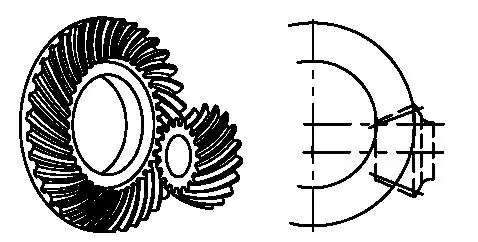
Hypoid gears are a type of spiral bevel gear commonly used in rear-wheel drive vehicles. Unlike traditional bevel gears, hypoid gears have non-intersecting axes, resulting in a sliding motion between the gear teeth. This unique design allows for efficient power transmission while accommodating the space constraints of modern drivetrain configurations.
Title 2: The Impact of NVH on Vehicle Performance
NVH issues, such as excessive gear noise, vibration, and harshness, can significantly affect the overall driving experience and vehicle performance. Excessive noise can lead to driver fatigue and discomfort, while excessive vibration can compromise the vehicle’s structural integrity and passenger comfort. Effective NVH management is essential to ensure a quiet and smooth ride.
Title 3: Noise Generation Mechanisms in Hypoid Gears
1. Meshing and contact noise: The interaction between the gear teeth during meshing results in noise generation due to varying tooth profiles and contact forces.
2. Gear whine: Gear whine is a tonal noise generated by irregularities in the gear tooth profile, gear misalignment, and variations in gear mesh stiffness.
3. Bearing noise: The rolling element bearings supporting the hypoid gears can contribute to overall gear noise if not properly designed or maintained.
Title 4: Vibration Analysis and Control Techniques
1. Modal analysis: Modal analysis is used to identify the natural frequencies and mode shapes of the gear system, enabling engineers to evaluate potential vibration issues.
2. Damping techniques: The application of damping materials or coatings helps reduce vibration amplitudes and dissipate energy, resulting in improved NVH performance.
3. Optimization of gear geometry: Adjusting the gear tooth profile, pressure angle, and tooth contact pattern can minimize vibration excitation and improve overall gear performance.
Title 5: Harshness Reduction Strategies
1. Isolation techniques: Implementing isolation mounts and bushings can effectively reduce the transmission of harshness-related vibrations to the vehicle chassis and passenger compartment.
2. Structural enhancements: Reinforcing critical areas of the drivetrain and suspension systems can minimize the transmission of harshness-related forces, leading to improved ride comfort.
3. Tuned mass dampers: Incorporating tuned mass dampers in the vehicle’s design can attenuate specific frequency ranges and mitigate harshness-related vibrations.
Title 6: Advanced Simulation and Testing Methods
1. Finite element analysis (FEA): FEA allows engineers to simulate the dynamic behavior of hypoid gears under various operating conditions, assisting in identifying potential NVH issues.
2. Experimental modal analysis: Experimental modal analysis involves subjecting the gear system to controlled vibrations and measuring the resulting structural responses to identify resonant frequencies and mode shapes.
Title 7: Surface Treatments and Coatings for NVH Reduction
1. Diamond-like carbon (DLC) coatings: DLC coatings applied to gear surfaces can reduce friction and wear, leading to quieter gear operation and improved NVH performance.
2. Vibration-absorbing coatings: Applying vibration-absorbing coatings to gear surfaces helps dissipate energy and reduce noise and vibration levels.
3. Surface roughness control: Maintaining optimal surface roughness on gear teeth reduces noise generation and promotes smoother gear meshing.
Our Gear Manufacturing Process
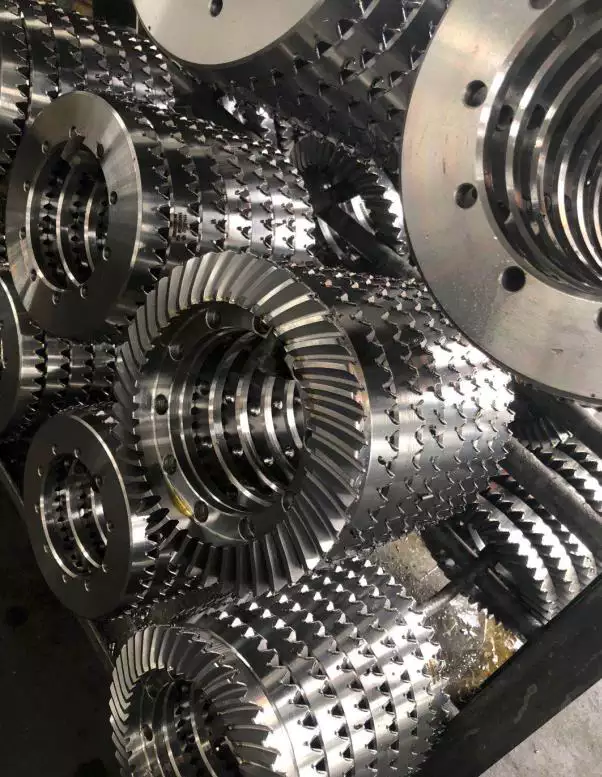
At our gear factory, we specialize in the production of high-quality gears, employing advanced manufacturing techniques to ensure precision and reliability. Our gear manufacturing process consists of the following steps:
1. Raw material preparation: We start by preparing the raw material through forging and heat treatment processes, ensuring the desired material properties for optimal gear performance.
2. Rough machining: The rough machining phase involves operations such as turning, drilling, and boring to shape the gear blank and prepare it for the next stages of processing.
3. Forming processes: We employ various forming processes, including gear hobbing, gear shaping, and gear shaving, to achieve the desired gear tooth profile and surface finish.
4. Semi-finishing operations: Semi-finishing operations such as chamfering, keyway cutting, and deburring are performed to remove sharp edges, enhance gear functionality, and ensure safety during assembly.
5. Heat treatment: Heat treatment processes such as carburizing, nitriding, or quenching and tempering are employed to improve the gear’s hardness, wear resistance, and overall durability.
6. Finishing operations: Precision grinding and honing are carried out to achieve the required gear tooth profile accuracy, surface finish, and noise reduction.
7. Inspection and quality control: Our gears undergo rigorous inspection and quality control procedures, including gear testing and surface treatment evaluation, to ensure they meet the highest industry standards.
Why Choose Our Gear Factory?
1. Advanced manufacturing capabilities: Our state-of-the-art gear manufacturing facilities are equipped with cutting-edge machinery, allowing us to produce gears with exceptional precision and quality.
2. Expertise in NVH management: With years of experience in the field, we have developed extensive expertise in noise, vibration, and harshness management, ensuring our gears meet the strictest NVH requirements.
3. Customization options: We offer a wide range of customization options, allowing our customers to tailor gears to their specific requirements, including gear tooth profiles, materials, and surface treatments.
4. Stringent quality control: Our commitment to quality is reflected in our rigorous quality control procedures, ensuring that each gear leaving our factory meets the highest standards of performance and reliability.
5. Timely delivery: We understand the importance of timely delivery, and our efficient production processes enable us to deliver gears within the agreed-upon timelines, ensuring minimal disruptions to our customers’ operations.
6. Competitive pricing: Despite our commitment to superior quality and advanced manufacturing capabilities, we strive to offer competitive pricing, making our gears a cost-effective choice for our customers.
Author: Miya