Hypoid Gear Manufacturing Defects
Introduction
Hypoid gears are crucial components in various mechanical systems, known for their ability to transmit power smoothly and efficiently. However, the manufacturing process of hypoid gears is complex, and defects can occur, compromising their performance and reliability. This article will explore the different manufacturing defects that can affect hypoid gears, providing insights into their causes and potential solutions.
1. Surface Roughness
The surface roughness of hypoid gears plays a significant role in their functionality. Excessive roughness can lead to increased friction, noise, and accelerated wear. Several factors contribute to surface roughness, such as improper machining techniques, tool wear, or inadequate lubrication during production.
1.1 Machining Techniques
When machining hypoid gears, the choice of cutting tools, cutting speeds, and feed rates can influence the surface roughness. Improper selection or adjustment of these parameters can result in irregularities and rough surfaces.
1.2 Tool Wear
As the cutting tools wear down during the production process, their ability to create smooth surfaces diminishes. This can lead to rough patches and imperfections on the hypoid gears.
1.3 Inadequate Lubrication
Insufficient lubrication during the machining process can cause the metal chips and debris to accumulate, resulting in surface imperfections and roughness.
2. Dimensional Inaccuracies
Dimensional inaccuracies in hypoid gears can significantly affect their functionality. These inaccuracies can arise due to several reasons, including errors in design, tool wear, or incorrect machine setup.
2.1 Design Errors
Flaws in the initial design can lead to dimensional inaccuracies in the final hypoid gears. Issues such as improper tooth profiles or incorrect tolerances can compromise the gear’s performance.
2.2 Tool Wear
As cutting tools wear down, they may no longer produce accurate dimensions, resulting in gear inaccuracies. Regular tool maintenance and replacement are essential to mitigate this issue.
2.3 Incorrect Machine Setup
Improper machine setup, such as misaligned cutting tools or incorrect spindle speeds, can lead to dimensional errors in the hypoid gears. Ensuring proper calibration and alignment is crucial to achieving accurate dimensions.
3. Material Defects
The choice of materials used in hypoid gear manufacturing is critical for their performance and durability. Material defects can occur due to impurities, inadequate heat treatment, or incorrect material selection.
3.1 Impurities
Presence of impurities in the material used for hypoid gears can weaken their structure and compromise their integrity. These impurities might be introduced during the manufacturing process or due to poor material quality.
3.2 Inadequate Heat Treatment
Improper heat treatment processes can result in material defects, including uneven hardness distribution or insufficient strength. This can lead to premature gear failure.
3.3 Incorrect Material Selection
Choosing the wrong material for hypoid gear manufacturing can result in material defects, such as brittleness or low fatigue resistance. Understanding the specific requirements of the gear application is essential for selecting the appropriate material.
Conclusion
In conclusion, manufacturing defects can significantly impact the performance and reliability of hypoid gears. Surface roughness, dimensional inaccuracies, and material defects are common issues that need to be addressed during the production process. By employing proper machining techniques, regular tool maintenance, and ensuring material quality, manufacturers can mitigate these defects and produce high-quality hypoid gears.
—
About Our Gear Manufacturing Factory
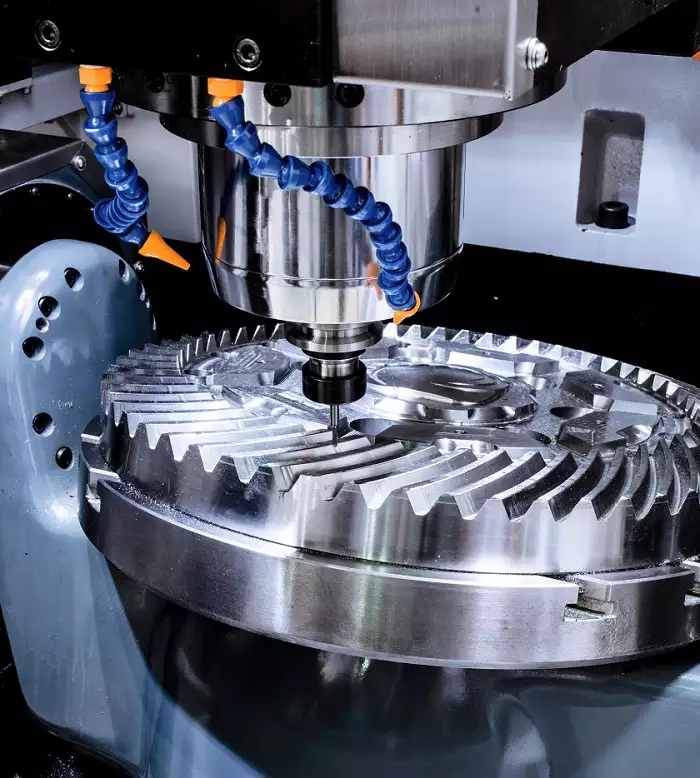
We are a professional gear manufacturing factory with expertise in producing high-quality gears for various industries. Our state-of-the-art facility and experienced team enable us to meet the diverse gear requirements of our clients efficiently.
Our Manufacturing Process
- Machining Preparation: Before the actual production, we prepare the gear blanks through processes like forging and heat treatment. This ensures the optimal material properties required for gear manufacturing.
- Rough Machining: The gear blanks undergo rough machining, including operations like turning, drilling, and boring, to achieve the desired shape and initial tooth geometry.
- Forming Process: We utilize specialized techniques like gear rolling, gear hobbing, or gear shaving to form the precise tooth profiles on the gears, ensuring smooth and efficient power transmission.
- Semi-Finishing: In this stage, we perform operations like chamfering, keyway machining, and deburring to remove sharp edges and enhance the overall gear quality.
- Heat Treatment: To improve the gears’ hardness and strength, we subject them to heat treatment processes like carburizing, nitriding, or quenching and tempering. This enhances their wear resistance and durability.
- Finishing Process: We employ precision grinding and honing techniques to achieve the desired gear accuracy, ensuring optimal meshing characteristics and noise reduction.
- Inspection and Quality Assurance: Each gear undergoes rigorous inspection procedures, including gear testing and surface treatment assessment, to ensure it meets the required standards and specifications.
We take pride in our comprehensive gear manufacturing process, which encompasses every stage from preparation to quality assurance. Our commitment to precision, quality, and customer satisfaction sets us apart, making us a reliable partner for all gear manufacturing needs.
Advantages of Choosing Our Factory
- Advanced manufacturing facility equipped with cutting-edge technology
- Experienced team of skilled engineers and technicians
- Strict quality control measures to ensure superior gear performance
- Customization options to meet specific client requirements
- Timely delivery and efficient customer service
- Competitive pricing and cost-effective solutions
Partnering with our gear manufacturing factory guarantees exceptional gear quality, seamless production processes, and reliable performance. Contact us today to discuss your gear requirements and experience the difference our expertise can make.
—
Author: Miya