Hypoid Gear Computer-Aided Engineering (CAE)
Introduction
In the field of mechanical engineering, Hypoid Gear Computer-Aided Engineering (CAE) plays a crucial role in the design and analysis of hypoid gears. This advanced technology combines computational methods with engineering principles to optimize gear performance, efficiency, and reliability. In this article, we will explore the various aspects of Hypoid Gear CAE and its significance in modern engineering.
Understanding Hypoid Gears
Hypoid gears are a type of spiral bevel gears with an offset pinion axes. They are widely used in various applications, including automotive differentials, power tools, and industrial machinery. The unique design of hypoid gears allows for smooth and efficient torque transmission, making them suitable for high power and heavy-duty applications.
1. Geometric Analysis
Hypoid Gear CAE involves in-depth geometric analysis of the gear system. This includes studying parameters such as tooth profile, pitch cone angles, and offset. The CAE software utilizes complex algorithms to calculate the precise geometry and ensure optimal gear meshing.
2. Load Analysis
Load analysis is another critical aspect of Hypoid Gear CAE. By considering factors like torque, speed, and operating conditions, engineers can accurately determine the load distribution on each gear tooth. This information helps in selecting appropriate materials and designing robust gear systems that can withstand the expected loads.
3. Stress and Strength Analysis
Stress and strength analysis plays a vital role in ensuring the durability and reliability of hypoid gears. Using CAE tools, engineers can simulate various operating conditions and evaluate the gear’s performance under different loads. This analysis helps identify potential areas of stress concentration and optimize the gear design accordingly.
4. Noise and Vibration Analysis
Noise and vibration are common issues in gear systems, especially in high-speed applications. Hypoid Gear CAE incorporates advanced algorithms to analyze and minimize noise and vibration levels. By optimizing gear profiles, tooth contact patterns, and surface finish, engineers can achieve quieter and smoother gear operation.
5. Lubrication Analysis
Efficient lubrication is crucial for the smooth functioning and longevity of hypoid gears. CAE tools enable engineers to simulate lubrication conditions and study factors such as oil film thickness, pressure distribution, and temperature rise. This analysis helps in selecting the right lubricant and optimizing the gear system for minimal friction and wear.
6. Optimization and Iteration
One of the significant advantages of Hypoid Gear CAE is its ability to optimize gear designs through iterative processes. By making incremental changes in parameters such as tooth profile, offset, and material properties, engineers can fine-tune the gear system for improved performance and efficiency. This iterative optimization significantly reduces the time and cost involved in traditional trial-and-error methods.
7. Manufacturing Considerations
Hypoid Gear CAE also takes into account manufacturing considerations. By simulating the manufacturing processes such as machining and heat treatment, engineers can predict the dimensional accuracy, surface finish, and material properties of the final product. This analysis helps in ensuring the manufacturability of the gear design and identifying any potential manufacturing challenges.
Our Gear Manufacturing Process
As a specialized gear factory, we adhere to a comprehensive gear manufacturing process that ensures high-quality products. Our process includes the following steps:
1. Blank Preparation: Forging and Heat Treatment
Before the gear manufacturing process begins, we prepare the blank by forging the raw material to the desired shape. The forged blank then undergoes a heat treatment process to enhance its mechanical properties, such as strength and durability.
2. Rough Machining: Turning, Drilling, and Boring
After blank preparation, we proceed with rough machining operations. This includes turning the blank to achieve the desired dimensions, drilling holes for keyways or lubrication channels, and boring precise bores for shaft fittings.
3. Forming Process: Gear Hobbing, Shaping, and Shaving
The next step in our gear manufacturing process is the forming process. Here, we employ gear hobbing, shaping, or shaving techniques to create the gear teeth. These processes ensure accurate tooth profiles and precise gear meshing.
4. Semi-Finishing: Chamfering, Keyway Machining, and Deburring
After the forming process, we move on to semi-finishing operations. This involves chamfering the edges of the gear teeth for smooth engagement, machining keyways for shaft fittings, and removing any burrs or sharp edges through deburring.
5. Heat Treatment: Carburizing, Nitriding or Quenching and Tempering
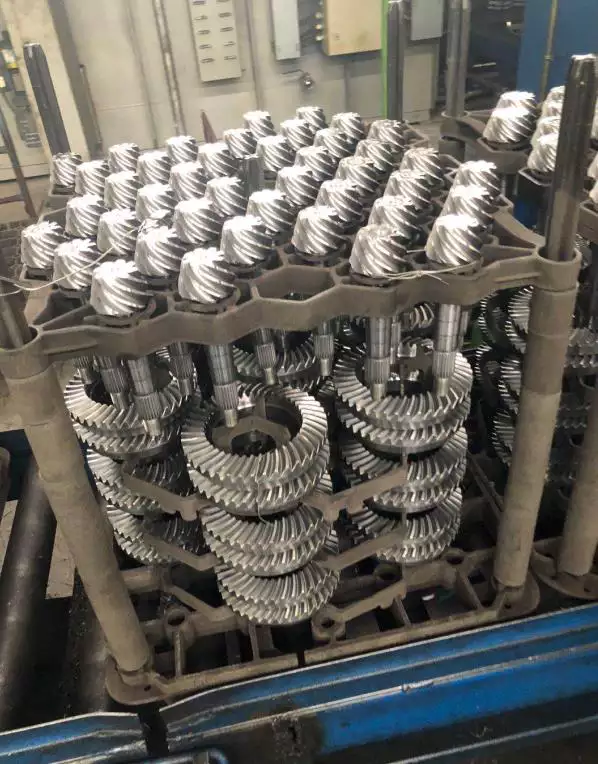
Heat treatment is an essential step to enhance the gear’s surface hardness and wear resistance. We utilize processes like carburizing, nitriding, or quenching and tempering to achieve the desired material properties and durability.
6. Finishing: Gear Grinding and Honing
In the finishing stage, we employ gear grinding and honing techniques to achieve exceptional dimensional accuracy and surface finish. These processes ensure smooth and precise gear operation.
7. Inspection and Acceptance: Gear Testing and Surface Treatment
Lastly, we conduct a thorough inspection and acceptance process to ensure the quality of our gears. This includes gear testing to check for proper tooth engagement, load-carrying capacity, and noise levels. We also provide surface treatment options for corrosion resistance or enhanced aesthetics.
About Our Gear Factory
As a leading gear manufacturer, we take pride in our expertise and commitment to delivering high-quality products. Our factory possesses several advantages that set us apart:
- Advanced Technology: We leverage state-of-the-art machinery and advanced CAE tools to design and manufacture gear systems with exceptional precision and performance.
- Experienced Engineers: Our team comprises highly skilled engineers who specialize in gear design, analysis, and manufacturing. They ensure the highest standards of quality and reliability in our products.
- Broad Product Range: We offer a wide range of gears, including hypoid gears, spiral bevel gears, helical gears, and more. Our diverse product range caters to various industrial applications.
- Customization Capabilities: We understand that each customer may have unique requirements. Hence, we provide customization options to tailor our gears to specific needs, ensuring optimal performance and compatibility.
- Quality Assurance: Our gears undergo rigorous testing and inspection to guarantee exceptional quality. We have established quality management systems to ensure compliance with industry standards.
- Timely Delivery: We prioritize efficient production and logistics processes to ensure on-time delivery of our products. We understand the importance of meeting project deadlines.
Partnering with us means gaining access to top-notch gear solutions backed by years of expertise and technical excellence. We strive to exceed customer expectations and forge long-lasting partnerships.
Author: Miya