Hypoid Gear Backlash Calculation and Adjustment
Introduction
In the field of mechanical engineering, hypoid gears play a crucial role in transmitting power between non-parallel shafts. One of the critical aspects of utilizing hypoid gears effectively is to understand and optimize the backlash calculation and adjustment. This article aims to delve into the intricacies of hypoid gear backlash calculation and adjustment, providing valuable insights for gear designers and manufacturers.
Understanding Hypoid Gears
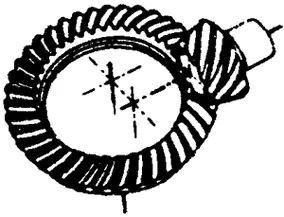
Before diving into the calculation and adjustment of backlash, it is essential to understand the basic principles of hypoid gears. Unlike traditional gears, hypoid gears have non-intersecting and non-parallel axes, enabling efficient power transmission even in tight spaces. The unique design of hypoid gears allows for high torque transmission and smooth operation. However, to ensure optimal performance, it is crucial to maintain the appropriate backlash.
The Importance of Backlash Calculation
Backlash refers to the slight clearance between mating gear teeth. It is vital to account for backlash during the design and manufacturing process to prevent issues such as noise, vibration, and premature wear. Calculating the backlash accurately ensures that the gears mesh properly without excessive play, resulting in efficient power transmission and extended gear life.
Factors Affecting Backlash
1. Tooth Profile: The tooth profile of hypoid gears, influenced by parameters such as pressure angle and profile shift, directly affects the backlash. Precise tooth profile design is crucial for achieving the desired backlash.
2. Center Distance: The distance between the gear axes, known as center distance, impacts the backlash. Proper determination of the center distance ensures optimal gear engagement and minimized backlash.
3. Gear Manufacturing Tolerances: Manufacturing variations, including tooth thickness variation and pitch diameter deviation, can affect the backlash. Controlling these tolerances within specified limits is essential for backlash control.
Backlash Calculation Methodology
Accurate backlash calculation requires a systematic approach. Here are the steps involved:
1. Determine Gear Parameters: Identify the gear specifications such as module, number of teeth, and tooth profile parameters.
2. Calculate Gear Dimensions: Utilize mathematical formulas to calculate gear dimensions, including pitch diameter, addendum, dedendum, and tooth height.
3. Determine Tooth Thickness: Calculate the tooth thickness based on the gear dimensions and considering manufacturing tolerances.
4. Apply Backlash Coefficient: Multiply the tooth thickness by a backlash coefficient to obtain the desired backlash value.
5. Verify the Calculated Backlash: Utilize measurement equipment such as gear testers to verify the calculated backlash value.
Backlash Adjustment Techniques
1. Shimming Method: Shimming involves adding or removing thin shims between the gear and its mating component to adjust the backlash. This method allows for precise backlash control.
2. Eccentric Bushing Method: Eccentric bushings provide a convenient way to adjust backlash. By rotating the eccentric bushing, the gear position can be fine-tuned to achieve the desired backlash.
3. Axial Movement Compensation: Adjusting the axial position of the gear can help optimize backlash. Precision positioning techniques, such as using axial movement screws, enable accurate backlash adjustment.
Conclusion
In conclusion, the calculation and adjustment of backlash play a crucial role in the performance and longevity of hypoid gears. By understanding the factors influencing backlash, following a systematic calculation methodology, and utilizing appropriate backlash adjustment techniques, gear designers and manufacturers can ensure optimal gear performance. Attention to detail in backlash calculation and adjustment is essential for maintaining gear efficiency, reducing noise and vibration, and maximizing overall gear system reliability.
About Our Gear Factory
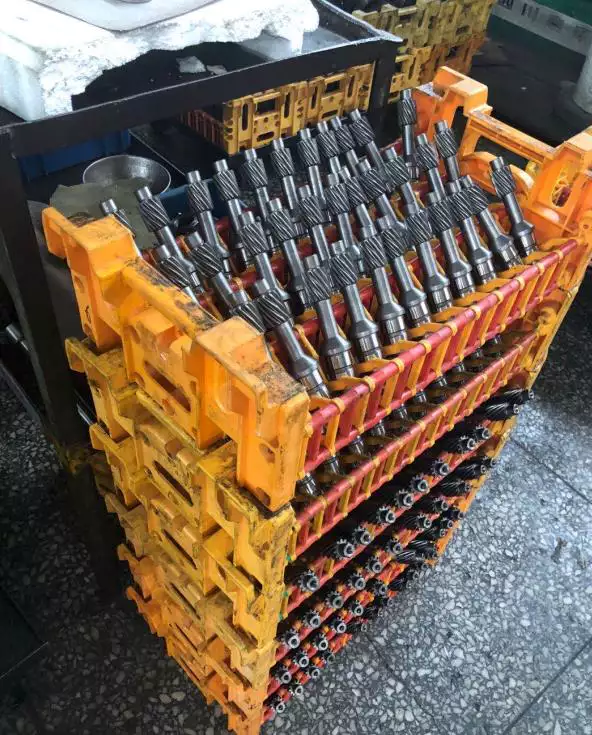
At our gear manufacturing factory, we specialize in producing high-quality gears for various industrial applications. With years of experience and cutting-edge technology, we strive to meet the diverse gear requirements of our clients. Here are the key steps involved in our gear manufacturing process:
1. Raw Material Preparation: We ensure the highest quality by carefully selecting and preparing the raw materials through processes like forging and heat treatment.
2. Rough Machining: Through precision turning, drilling, and boring operations, we shape the gears into their initial form.
3. Forming Process: Our skilled technicians perform gear rolling, gear hobbing, and gear shaving to achieve the desired gear tooth shape and dimensions.
4. Semi-Finishing: To ensure smooth gear operation, we conduct processes like chamfering, keyway machining, and deburring to eliminate any sharp edges or burrs.
5. Heat Treatment: Gears undergo heat treatment processes such as carburizing, nitriding, or quenching and tempering to enhance their hardness and durability.
6. Finishing Process: Through gear grinding and honing, we achieve precise gear tooth profiles and excellent surface finish.
7. Inspection and Quality Assurance: Our dedicated quality control team performs rigorous gear inspection using advanced testing methods to ensure compliance with specifications and standards.
Our Advantages
1. Advanced Technology: We leverage state-of-the-art machinery and advanced manufacturing techniques to produce gears with exceptional precision and performance.
2. Experienced Team: Our team of skilled engineers and technicians has extensive expertise in gear manufacturing, ensuring top-notch quality and adherence to customer requirements.
3. Customization Capability: We understand that each application demands unique gear solutions. With our customization capability, we can tailor gears to meet specific requirements, including backlash control.
4. Quality Assurance: We have established stringent quality control measures throughout the manufacturing process to deliver gears of the highest quality and reliability.
5. Timely Delivery: We prioritize efficient production planning and streamlined processes to ensure on-time delivery of gears to our customers.
6. Competitive Pricing: Our commitment to providing cost-effective solutions enables us to offer competitive pricing without compromising on quality or performance.
7. Customer Satisfaction: We value strong customer relationships and strive to exceed their expectations by delivering superior gears and excellent customer service.
Author: Miya