How to determine spline shaft tolerances?
Introduction
Spline shaft tolerances play a critical role in various mechanical applications. Understanding how to determine these tolerances ensures the proper functioning and longevity of spline shafts. In this article, we will delve into the intricacies of determining spline shaft tolerances and explore the key factors to consider.
1. Understanding Spline Shaft Tolerances
Spline shaft tolerances refer to the permissible deviation in the dimensions of a spline shaft. These tolerances are crucial for achieving the desired fit and functionality in mechanical assemblies.
2. Types of Spline Shaft Tolerances
There are different types of spline shaft tolerances, including:
- Radial Clearance Tolerance
- Axial Clearance Tolerance
- Angular Clearance Tolerance
3. Factors Influencing Spline Shaft Tolerances
Several factors determine the appropriate tolerance range for spline shafts:
- Application Requirements: The specific application requirements dictate the allowable deviations in spline shaft dimensions.
- Material Properties: The material used for the spline shaft affects its dimensional stability and thermal expansion, which in turn impacts the tolerance range.
- Manufacturing Process: The chosen manufacturing process, such as hobbing or broaching, influences the achievable tolerances.
- Assembly Conditions: The conditions under which the spline shaft is assembled, including temperature and lubrication, affect the required tolerances.
4. Determining Spline Shaft Tolerances
To determine spline shaft tolerances, the following steps can be followed:
- Define the Application Requirements: Understand the functional requirements and load conditions that the spline shaft will experience.
- Consult Standards and Guidelines: Refer to industry standards and guidelines, such as ISO 4156, for recommended tolerance ranges.
- Consider Material and Manufacturing Factors: Account for the material properties and manufacturing process limitations to establish realistic tolerance values.
- Perform Finite Element Analysis (FEA): Utilize FEA software to simulate the spline shaft’s behavior under various operating conditions and optimize the tolerances accordingly.
- Validate and Fine-tune: Conduct practical tests and measurements to validate the chosen tolerances and make any necessary adjustments.
5. Importance of Accurate Spline Shaft Tolerances
Accurate spline shaft tolerances are crucial for several reasons:
- Proper Assembly: Precise tolerances ensure the smooth assembly of mechanical components, preventing excessive play or interference.
- Optimal Power Transmission: Correct tolerances minimize energy losses by reducing backlash and improving torque transmission.
- Extended Lifespan: Appropriate tolerances enhance the durability and reliability of spline shafts, minimizing wear and premature failure.
Conclusion
Determining spline shaft tolerances involves accounting for various factors like application requirements, material properties, and manufacturing constraints. By following the recommended steps and considering these factors, engineers can ensure the proper functioning and longevity of spline shafts in their mechanical designs.
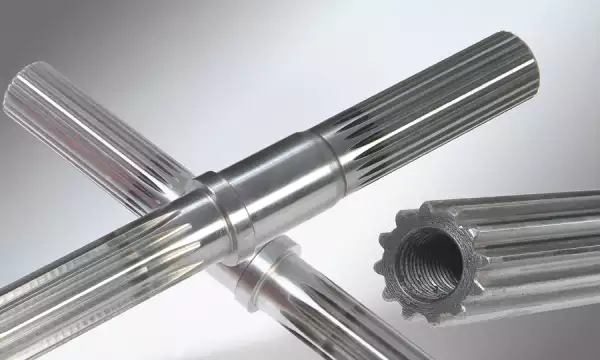
Our company specializes in the production and sales of various types of gears and spline shafts. With years of experience in the industry, we have established ourselves as a leader in the market. Here are five key advantages that set us apart:
Advantage 1: High-Quality Products
We pride ourselves in delivering top-notch gear and spline shaft solutions that meet the highest industry standards. Our products are manufactured using the finest materials and undergo rigorous quality control processes to ensure durability and reliability.
Advantage 2: Customization Options
We understand that every project has unique requirements. That’s why we offer a wide range of customization options for our gear and spline shaft products. From different sizes and materials to specific tolerances, we can tailor our solutions to meet your exact needs.
Advantage 3: Expert Engineering Team
Our team of skilled engineers has extensive expertise in spline shaft design and manufacturing. They are committed to providing innovative solutions and technical support to help you determine the perfect tolerances for your spline shaft applications.
Advantage 4: State-of-the-Art Facilities
We have invested in advanced manufacturing facilities and equipment to ensure precise and efficient production processes. Our modern facilities allow us to deliver high-quality spline shafts with quick turnaround times, meeting even the most demanding project timelines.
Advantage 5: Exceptional Customer Service
At our company, customer satisfaction is our top priority. We strive to provide exceptional customer service at every stage of the process. Our team is dedicated to understanding your needs, offering expert advice, and delivering prompt and professional support.

Spline Shaft Working Principle and Function
A spline shaft is a mechanical component used to transmit torque between connected objects while allowing for relative axial movement. It consists of a series of ridges or teeth on the shaft that mesh with corresponding grooves or slots in the mating component. This design enables efficient power transmission and accommodates axial misalignment.
Spline Shaft Design and Selection Guide
When designing and selecting a spline shaft, several factors need to be considered. These include the torque requirements, speed, operating conditions, and alignment accuracy. Our team of experts can guide you through the process, helping you make informed decisions to ensure optimal performance and longevity of your spline shaft applications.
Spline Shaft Manufacturing and Processing Techniques
The manufacturing and processing of spline shafts require precision and expertise. We utilize advanced techniques such as CNC machining and grinding to achieve tight tolerances and smooth surface finishes. Our experienced technicians ensure that each spline shaft is manufactured to the highest standards, meeting or exceeding industry specifications.
Spline Shaft Applications and Industry Practices
Spline shafts find application in various industries, including automotive, aerospace, machinery, and more. They are commonly used in power transmission systems, steering mechanisms, and other applications that require torque transfer along with axial movement. Our company has extensive experience in these industries, providing reliable spline shaft solutions that enhance performance and efficiency.
We welcome the opportunity to collaborate with you and meet your gear and spline shaft requirements. Our commitment to quality, customization, technical expertise, and customer satisfaction makes us the ideal partner for all your projects. Contact us today to discuss how we can assist you.
Author: Miya