How to conduct a vibration analysis on a swing gearbox to detect early faults?
Introduction
A swing gearbox is a crucial component in excavators and other heavy machinery. It is responsible for transferring rotational power from the hydraulic motor to the excavator’s swing mechanism, which rotates the machinery. A malfunctioning gearbox can cause significant downtime and costly repairs. Therefore, it is essential to conduct regular vibration analysis on the swing gearbox to detect early faults and prevent sudden breakdowns. In this article, we will discuss how to conduct a vibration analysis on a swing gearbox to detect early faults.
Step 1: Measuring the Vibration
The first step in conducting a vibration analysis on a swing gearbox is measuring the vibration. This can be done using a vibration meter, which measures the amplitude and frequency of vibrations. The vibration meter should be attached to the gearbox at a location specified by the manufacturer. The measurement should be taken when the gearbox is in operation, and the excavator is idle. The results should be recorded, and any significant deviation from the manufacturer’s specifications should be noted.
Step 2: Analyzing the Data
The next step is to analyze the data collected from the vibration meter. The analysis should be done by a trained technician who understands the gearbox’s specifications and the acceptable limits of vibration amplitude and frequency. Any deviation from the manufacturer’s specifications should be investigated further to uncover the root cause of the problem.
Step 3: Identifying the Faults
Once the analysis is done, the technician should be able to identify any faults in the gearbox. Faults can be categorized as mechanical, electrical, or operational. Mechanical faults include bearing wear, gear wear, and misalignment. Electrical faults can be caused by issues with the wiring or insulation. Operational faults can be caused by issues with the hydraulic system or operator error.
Step 4: Taking Corrective Action
After identifying the faults, the technician should take corrective action to fix the problem. This may involve replacing worn bearings, gears, or other components, repairing electrical issues, or adjusting the hydraulic system. It is essential to follow the manufacturer’s recommendations for corrective action and to ensure that the work is done by qualified technicians.
Step 5: Regular Maintenance
To prevent future faults and breakdowns, it is essential to conduct regular maintenance on the swing gearbox. This should include regular vibration analysis, inspection of the gearbox’s components, and lubrication of moving parts. Regular maintenance will help to extend the gearbox’s lifespan and prevent costly repairs.
Our Company
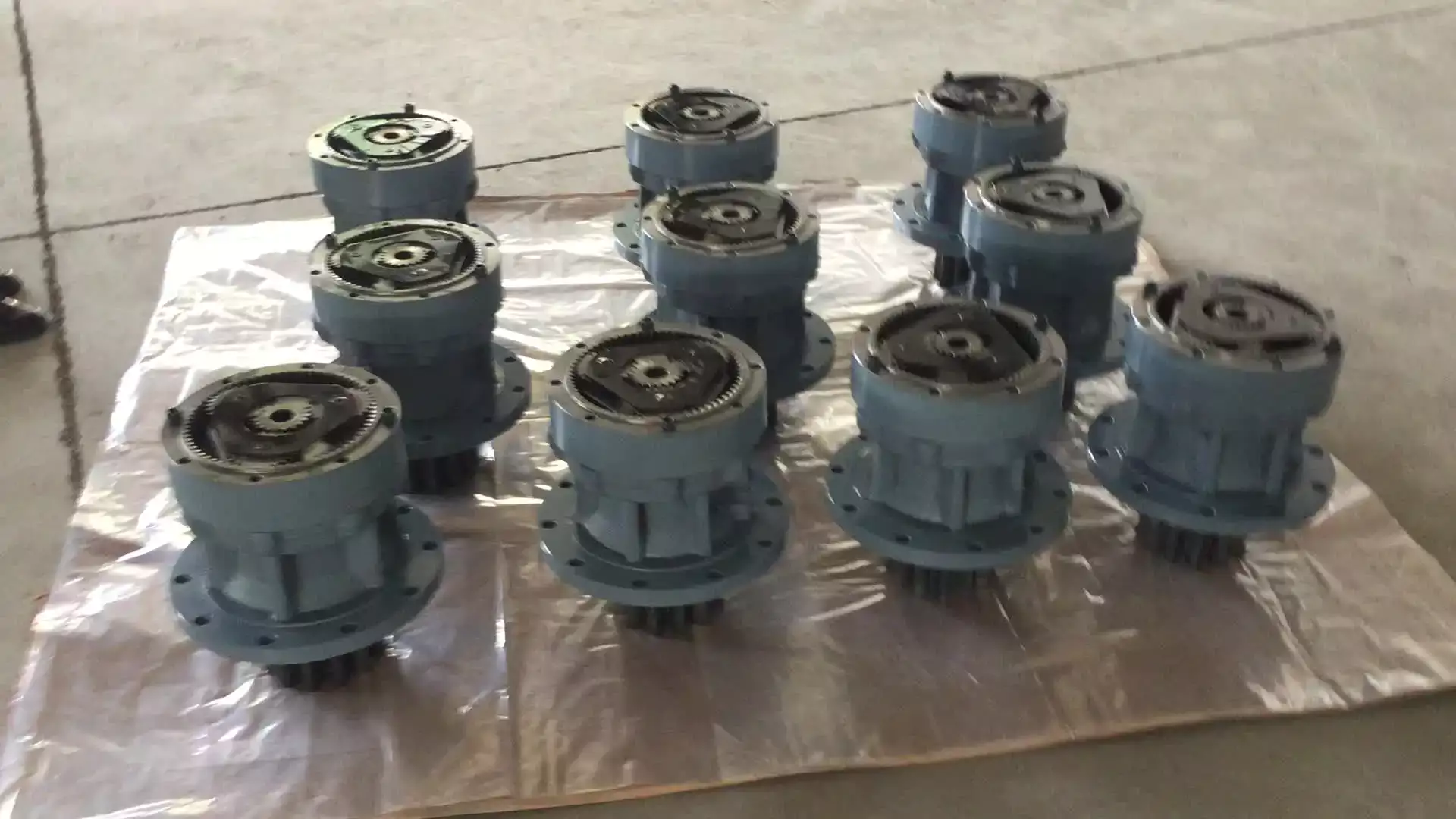
Our company is a professional gearbox manufacturer with over 20 years of market experience. We specialize in designing and manufacturing various types of gearboxes, including swing gearboxes for excavators. Our products are of high quality, durable, and suitable for use in various industries. Our advantages include:
- Rich industry experience and expertise
- Comprehensive product line
- Precision manufacturing technology
- Innovation in technology development
- Flexible customization services
- Fast response capability
- Excellent after-sales service
- Globalization strategy
When to Replace Swing Drive Gearbox on Excavators
Swing drive gearbox is a crucial component in excavators, and it needs to be replaced when:
- The gearbox makes unusual noises
- The excavator’s swing mechanism is slow or unresponsive
- The gearbox is leaking oil
- The gearbox is overheating
- The gearbox has exceeded its lifespan
If the gearbox makes unusual noises such as grinding, clicking, or whining, it may be a sign of worn bearings or gears. It is essential to replace the gearbox promptly to prevent further damage.
If the excavator’s swing mechanism is slow or unresponsive, it may be a sign of a malfunctioning gearbox. It is essential to replace the gearbox promptly to prevent further damage.
If the gearbox is leaking oil, it may be a sign of a cracked casing or worn seals. It is essential to replace the gearbox promptly to prevent further damage.
If the gearbox is overheating, it may be a sign of worn bearings, gears, or insufficient lubrication. It is essential to replace the gearbox promptly to prevent further damage.
If the gearbox has exceeded its recommended lifespan, it is essential to replace it promptly to prevent sudden breakdowns and costly repairs.
Swing Gearbox Buying Guide

| Parameter | Description |
|---|---|
| Excavator Model | The model of the excavator the gearbox will be used in |
| Swing Speed | The desired speed of the swing mechanism |
| Maximum Torque | The maximum torque the gearbox can handle |
| Mounting Position | The location and orientation of the gearbox on the excavator |
| Operating Temperature | The range of temperature the gearbox can operate in |
Compatible Excavator Brands and Models
Our swing gearboxes are compatible with a wide range of excavator brands and models, including:
- Caterpillar
- Komatsu
- Hitachi
- Volvo
- Hyundai
Conclusion
Regular vibration analysis is essential to detect early faults in swing gearboxes and prevent costly repairs and downtime. By following the steps outlined in this article, you can conduct a vibration analysis on your swing gearbox and identify any faults that may need correcting. Our company specializes in designing and manufacturing high-quality swing gearboxes for excavators and offers flexible customization services to meet your specific needs.
Author: Miya