How to Calculate the Acceleration of a Pulley System
In the study of physics and engineering, understanding the dynamics of a pulley system is crucial. A pulley system’s acceleration is one of the key aspects that you might need to calculate to fully understand its functioning. This article will guide you on how to calculate the acceleration of a pulley system in detail.
Understanding the Pulley System
A pulley system comprises one or more pulleys, ropes, or cables. The system works on the principle of distributing weight and changing the direction of force, which makes lifting heavy objects easier. The acceleration of a pulley system depends on several factors, including the mass of the objects, the friction in the system, and gravity.
The Basic Physics Principles Involved
Before we delve into the specifics of calculating the acceleration of a pulley system, it’s important to grasp the basic physics principles involved. Newton’s second law of motion is particularly integral to this process. This law states that the acceleration of an object is directly proportional to the net force acting on it and inversely proportional to its mass.

Identifying the Variables
When calculating the acceleration of a pulley system, we need to identify the variables in the system. These include the mass of the object (m), the gravitational force (g), and the tension in the rope (T). Additionally, if there’s friction in the system, the frictional force (f) will also be a variable.
Calculating the Acceleration
The next step is to calculate the acceleration. This can be done using the formula a = (m1 – m2)g / (m1 + m2), where m1 and m2 are the masses of the two objects, and g is the acceleration due to gravity. This formula assumes that there is no friction in the pulley system. If there is friction, the formula becomes a bit more complex and will need to incorporate the frictional force.
Considering the Effects of Friction
Friction can significantly impact the acceleration of a pulley system. The frictional force can be calculated using the formula f = μN, where μ is the coefficient of friction and N is the normal force. Once you have calculated the frictional force, you can substitute it into the acceleration formula to get the accurate acceleration value.
Practical Examples and Solutions
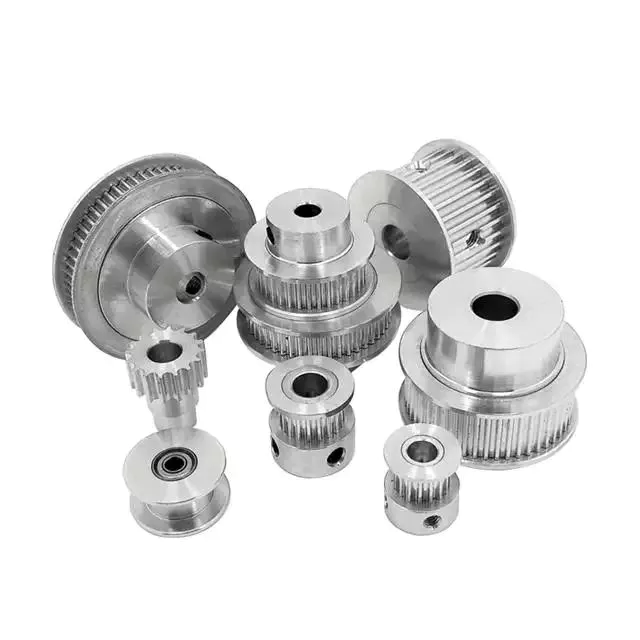
To illustrate these principles, let’s consider a few practical examples. For instance, if you have a pulley system with two objects of masses 5kg and 10kg, and there is no friction in the system, you can use the acceleration formula to calculate the acceleration. In this case, the acceleration will be a = (10 – 5) * 9.8 / (10 + 5) = 1.96 m/s².
Conclusion
Understanding the physics behind a pulley system and how to calculate its acceleration can be incredibly beneficial, particularly in fields like engineering and mechanics. By identifying the variables and applying the correct formulas, you can accurately determine the acceleration of a pulley system. It’s important to remember, however, that these calculations are idealised and that in real-world applications, factors like air resistance and friction can significantly affect the system’s acceleration.