How Pulley Works
A pulley is a simple machine that has been utilized in various forms for thousands of years. It’s a remarkably versatile tool that significantly reduces the amount of effort required to lift heavy objects. But, how does a pulley actually work? What are the components involved, and what are the principles that underlie its operation?

Understanding the Basic Concept of a Pulley
A pulley is essentially a wheel on an axle that is designed to support movement and change of direction of a cable or belt along its circumference. Pulleys are used in various forms in everyday life, from the lifting of weights to the operation of blinds, and many more applications. They are also found in many types of machinery, from cranes to elevators.
Components of a Pulley System
A standard pulley system consists of three main parts: the wheel, the axle, and the rope or belt. The wheel, also known as the sheave, is the part that the rope or belt moves on. The axle is the part that supports the wheel, and the rope or belt is the part that carries the load. The force applied to the rope or belt creates movement in the wheel, and this movement is what lifts or moves the load.
The Principle of Mechanical Advantage
At the heart of how a pulley works is a principle known as the ‘mechanical advantage’. This is the factor by which a machine multiplies the force put into it. In the case of a pulley, the mechanical advantage comes from the fact that the tension in the rope or belt is the same throughout its length. This means that the force applied at one end is the same as the force exerted on the load at the other end. However, by using multiple pulleys in a system, it is possible to multiply this force, making it easier to lift or move the load.
Types of Pulley Systems
There are three basic types of pulley systems: fixed pulleys, movable pulleys, and compound pulleys. A fixed pulley is the simplest type, where the pulley is fixed to a structure and doesn’t move. The mechanical advantage of a fixed pulley is one, meaning it doesn’t multiply force, but changes the direction of force. A movable pulley, on the other hand, is attached to the load and moves with it. This type of pulley offers a mechanical advantage of two, doubling the input force. Finally, a compound pulley system uses a combination of fixed and movable pulleys to provide even greater mechanical advantage.
Real-World Applications of Pulleys
Pulleys are used in a wide range of applications in the real world. They are used in construction cranes to lift heavy materials, in elevators to lift people and goods, in window blinds to raise and lower the blinds, and in many types of engine to drive various components. They are also used in gym equipment to provide resistance for strength training exercises.
Conclusion
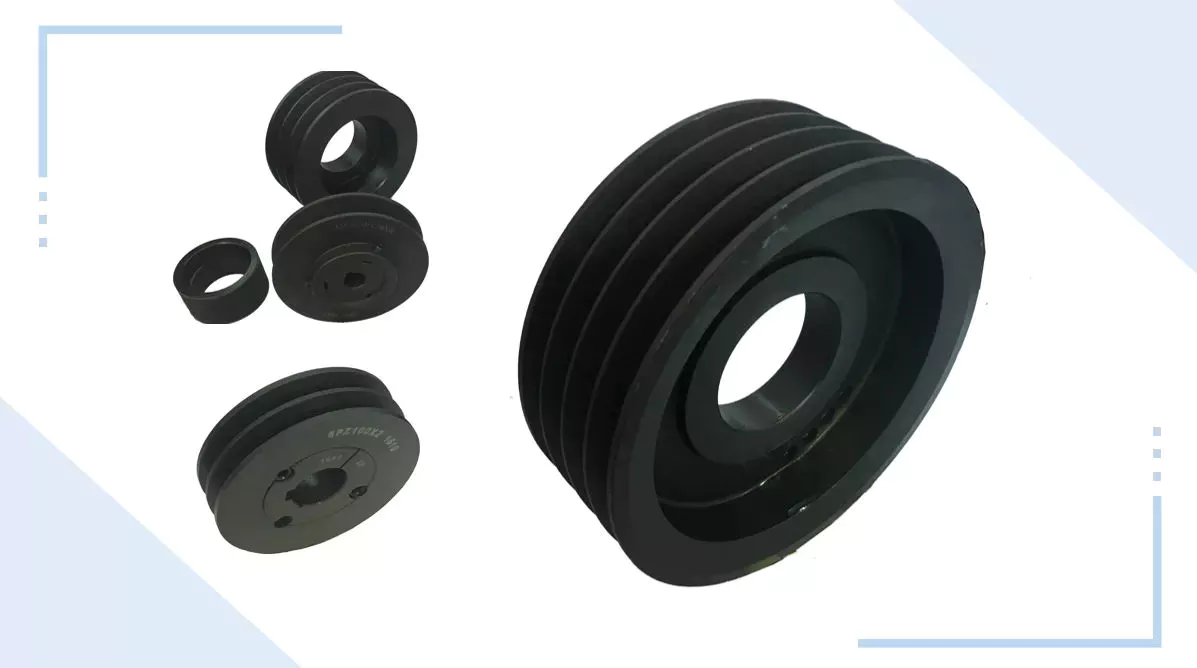
In conclusion, a pulley is a simple but powerful machine that operates on the principle of mechanical advantage. By using a wheel and a rope or belt, it can significantly reduce the amount of force required to lift or move heavy loads. Whether it’s in a construction crane, an elevator, or a gym, the humble pulley is an essential part of our modern world.