How is the Effort Applied in the Screw Jack?
The question “how is the effort applied in the screw jack” often arises among those keen to understand the mechanics of this essential tool. The screw jack, a simple yet significant device, operates using principles rooted in physics. Let’s delve into understanding its functioning, focusing on how effort comes into play.
Understanding the Screw Jack
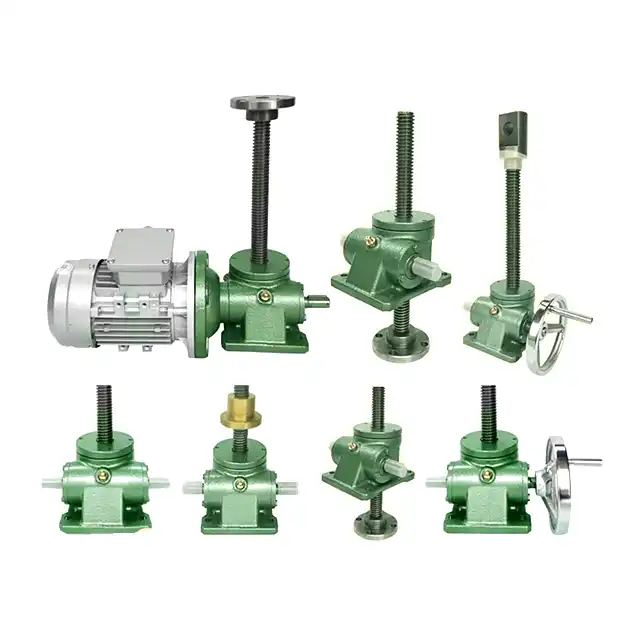
A screw jack, also known as a jackscrew or car jack, is a mechanical device primarily used to lift heavy objects or apply great forces. The effort applied in a screw jack is the force exerted to turn the screw. This effort is what enables the transformation of rotational motion into linear motion, facilitating the lifting or moving of heavy objects.
Principles of a Screw Jack
The screw jack operates on the principle of the simple machine, the screw. It converts rotational motion into linear motion. This principle works with the help of two essential components: the lead screw and the nut. When effort is applied to the lead screw, it turns either clockwise or counterclockwise. This rotational motion then makes the nut move upwards or downwards on the threads of the screw, creating linear motion.
Effort and the Screw Jack
In a screw jack, the effort applied is the force or torque applied to the handle or lever to turn the screw. This turning motion, or torque, is then transferred through the screw and into the object that the jack is lifting. It’s crucial to understand that the effort applied to the screw jack is amplified through the mechanical advantage of the screw. This amplification allows a relatively small force to lift a much larger weight, making the screw jack a powerful tool despite its simple design.
Mechanical Advantage of a Screw Jack
The mechanical advantage of a screw jack is the ratio of the load lifted to the effort applied. It’s determined by the lead of the screw, the distance the nut moves along the screw in one complete turn, and the length of the operating handle. The greater the mechanical advantage, the less effort is required to lift a particular load.
Factors Influencing the Effort Applied
The effort applied to a screw jack can be influenced by various factors. These include the size and design of the screw jack, the weight of the object being lifted, the friction between the screw and the nut, and the length of the handle or lever. A longer handle requires less effort to rotate the screw, while a higher friction between the screw and nut requires more effort.
Efficiency of a Screw Jack
The efficiency of a screw jack is the ratio of useful work done to the total work put in. It’s influenced by the mechanical advantage and the friction between the screw and the nut. Higher efficiency means that less effort is wasted in overcoming friction and more of the applied effort is used to lift the load.
The Role of Lubrication
Lubrication plays an essential role in reducing the friction between the screw and the nut, thereby decreasing the amount of effort required to operate the screw jack. Regular lubrication can significantly improve the efficiency of a screw jack.
Conclusion
The operation of a screw jack is a marvel of simple physics. The effort applied is transformed into a powerful force able to lift heavy objects with relative ease. Understanding the principles of the screw jack allows us to appreciate the genius of this simple yet effective tool.