How Does the Screw Jack Work?
A screw jack, often referred to as a jackscrew or a car jack, is a mechanical device designed to lift heavy loads or apply significant forces using a screw mechanism. Its principle of operation is based on the theory of the simple machine, specifically, the screw.
Understanding the Basic Concept
The screw jack operates using rotary motion converted into linear motion. This means that the user turns a crank or uses a motor to rotate the screw. As the screw rotates, it moves up or down the thread, which results in the lifting or lowering of the load.
Components of a Screw Jack
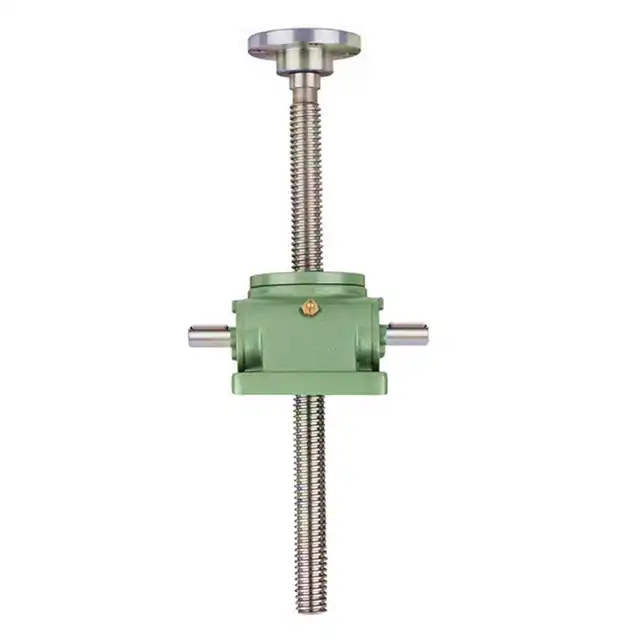
The screw jack consists of several key components, each playing a vital role in the functionality of the device. These include the screw, gear, crank handle, base, and the cap or load platform.
The Screw
The screw is the main component of a screw jack. It’s a cylindrical rod with a helical external thread. When it rotates, the thread converts the rotational motion into linear motion, causing the load to be lifted or lowered.
The Gear
The gear is a round, toothed component that is used to transmit the rotational motion from the crank handle to the screw. It’s designed to increase the mechanical advantage, making it easier to lift heavy loads.
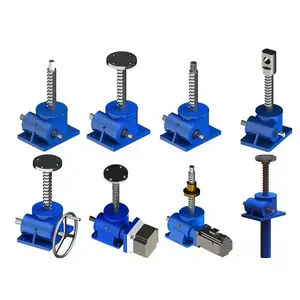
The Crank Handle
The crank handle is the part of the screw jack that the user rotates. As it turns, it causes the gear and the screw to rotate, resulting in the lifting or lowering of the load.
The Base
The base of the screw jack is the part that rests on the ground. It’s usually broad and flat to provide stability, ensuring that the jack doesn’t tip over when lifting heavy loads.
The Cap or Load Platform
The cap or load platform is the part of the screw jack that comes into contact with the load to be lifted. It’s typically flat and robust to ensure a secure and stable lifting process.
The Mechanics of a Screw Jack
When the crank handle of the screw jack is turned, the gear in the device rotates, causing the screw to turn as well. As the screw turns, its threads interact with the threads of the nut or load platform. This interaction causes the nut or load platform to move up or down the screw, depending on the direction of rotation. This movement is what results in the lifting or lowering of the load.
The Efficiency of a Screw Jack
The efficiency of a screw jack depends on several factors, including the pitch of the screw, the friction between the screw and the nut, and the load being lifted. Generally, screw jacks are highly efficient when lifting light loads but can become less efficient when lifting heavy loads due to increased friction.
Applications of a Screw Jack
Screw jacks are used in a wide range of applications. They’re commonly used in the automotive industry for lifting vehicles during repairs or tire changes. In the construction industry, they’re used for lifting heavy materials and equipment. They’re also used in various industrial processes, including manufacturing and assembly lines.
Conclusion
In conclusion, a screw jack is a simple yet powerful device that uses the principle of the screw to lift heavy loads or apply significant forces. Its efficiency and versatility make it an essential tool in various industries.