How does spline shaft backlash affect system accuracy?
Introduction
Spline shaft backlash is an important factor that affects the accuracy of a system. In this article, we will explore the various ways in which spline shaft backlash can impact the overall system accuracy and performance.
1. Understanding Spline Shaft Backlash
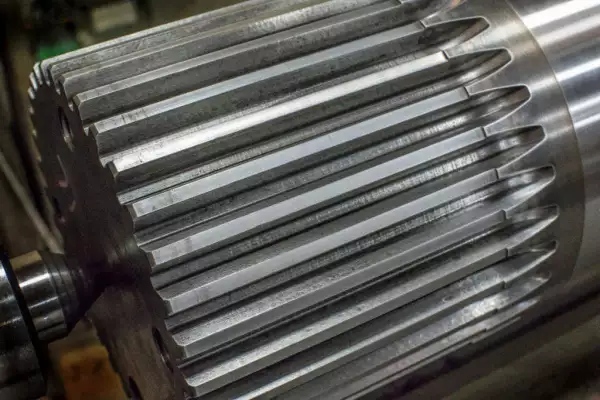
Spline shaft backlash refers to the angular movement or play between the teeth of the spline shaft and the mating component. It is caused by gaps or clearances between the teeth, which can result in unwanted movement and affect the accuracy of the system.
2. Effects of Spline Shaft Backlash on System Accuracy
Spline shaft backlash can have several negative effects on the accuracy of a system:
a) Reduced Positioning Accuracy
Backlash in the spline shaft can lead to inaccurate positioning of the components, resulting in deviations from the desired location. This can be critical in systems that require precise positioning, such as robotics or automated machinery.
b) Increased Response Time
The presence of backlash requires the system to take up the slack before any movement can occur. This additional response time can lead to delays and affect the overall efficiency of the system.
c) Oscillations and Vibrations
Backlash can cause oscillations and vibrations in the system, especially during rapid and frequent direction changes. These unwanted movements can introduce inaccuracies and compromise the stability of the system.
d) Cumulative Error
Over time, the accumulated effects of backlash can result in a cumulative error. This means that the system’s accuracy will gradually deteriorate, leading to decreased performance and potentially compromising the quality of the output.
3. Mitigating Spline Shaft Backlash
To maintain system accuracy, it is crucial to minimize or eliminate spline shaft backlash. Several approaches can be taken:
a) Precise Manufacturing and Assembly
Using high-precision machining and assembly techniques can help reduce backlash by minimizing gaps and clearances between the spline teeth and mating components.
b) Proper Lubrication
Applying suitable lubrication to the spline shaft can help reduce friction and minimize the effects of backlash.
c) Backlash Compensation
Implementing backlash compensation techniques, such as software algorithms or mechanical mechanisms, can help offset the effects of backlash and improve system accuracy.
Conclusion
Spline shaft backlash is a crucial factor that can significantly impact the accuracy and performance of a system. Understanding its effects and implementing appropriate mitigation measures is essential for maintaining optimal system accuracy and ensuring reliable operation.

Introduction
We are a leading company specializing in the production and sales of various types of gears and spline shafts. With our expertise and experience in this field, we have several advantages that set us apart from our competitors:
- High-Quality Products: We pride ourselves on delivering gears and spline shafts of the highest quality that meet or exceed industry standards.
- Wide Range of Options: Our company offers a diverse selection of gears and spline shafts, catering to different needs and applications.
- Customization: We understand that each project may have unique requirements. Therefore, we provide customization options to ensure our products fit perfectly.
- Advanced Manufacturing Techniques: Our state-of-the-art manufacturing facilities and advanced techniques allow us to produce gears and spline shafts with precision and efficiency.
- Reliable Performance: Our products are known for their durability, reliability, and long lifespan, ensuring optimal performance in various systems.
Spline Shaft Working Principle and Function
A spline shaft is a mechanical component used to transmit torque between a driver and driven element. It consists of a series of ridges or teeth that mesh with corresponding grooves in a mating component, allowing for torque transfer and rotational movement.
The main function of a spline shaft is to enable smooth power transmission, ensuring accurate and efficient operation of the system. It provides a secure connection, preventing slippage and minimizing backlash, thereby maximizing system accuracy.
Spline Shaft Design and Selection Guide
When designing and selecting a spline shaft, several factors need to be considered:
- Load Requirements: Assess the expected torque, speed, and operating conditions to determine the appropriate spline shaft design.
- Material Selection: Choose materials with suitable mechanical properties, corrosion resistance, and wear resistance to ensure optimal performance and longevity.
- Tolerance and Fit: Determine the required tolerance and fit between the spline shaft and mating component to achieve the desired level of clearance and backlash.
- Size and Geometry: Consider the available space and dimensional constraints to ensure proper fit and functionality of the spline shaft within the system.
- Manufacturability: Evaluate the feasibility of manufacturing the chosen spline shaft design, considering factors such as cost, lead time, and production capabilities.
Spline Shaft Manufacturing and Machining Techniques
The manufacturing and machining of spline shafts involve several key techniques:
- Turning: The initial rough shaping of the spline shaft is often done through turning, where a cutting tool removes excess material.
- Broaching: Broaching is a process used to create the spline teeth by gradually removing material using a specialized cutting tool.
- Grinding: Grinding is employed to achieve precise dimensions, smooth surface finish, and accurate spline tooth profiles.
- Heat Treatment: Heat treatment processes such as carburizing or induction hardening may be utilized to enhance the hardness and strength of the spline shaft.
- Quality Control: Stringent quality control measures are implemented at every stage of manufacturing to ensure that the spline shafts meet all required specifications.
Spline Shaft Applications and Industry Practices
Spline shafts find applications in various industries, including:
- Automotive: Spline shafts are used in automotive transmissions, steering systems, and powertrain components.
- Mechanical Engineering: They are employed in machinery, industrial equipment, and precision motion systems.
- Aerospace: Spline shafts play a crucial role in aerospace applications, such as aircraft landing gear systems and turbine engines.
- Marine: Spline shafts are utilized in marine propulsion systems and marine gearbox assemblies.
- Renewable Energy: They are important components in wind turbine systems, efficiently transmitting power from the rotor to the generator.
Conclusion
With our extensive knowledge, superior quality products, advanced manufacturing techniques, and a wide range of options, we are the ideal partner for all your gear and spline shaft needs. Contact us today to discuss how we can collaborate and provide you with the best solutions for your specific requirements.
Author: Miya