How does spiral bevel gear design affect overall drivetrain weight?
Introduction
Spiral bevel gears are an essential component of drivetrains in various industries. The design of these gears plays a crucial role in determining the overall weight of the drivetrain. In this article, we will explore how different aspects of spiral bevel gear design impact the weight of the drivetrain.
1. Tooth Profile Optimization
The tooth profile of spiral bevel gears can be optimized to reduce weight. By employing advanced mathematical algorithms, the gear teeth can be shaped in a manner that maintains the required strength while minimizing material usage. This optimization process results in lighter gear components without compromising their performance.
2. Material Selection
Choosing the right materials for spiral bevel gears is vital for weight reduction. High-strength alloys with low density can be utilized to manufacture gears that are both lightweight and durable. These materials possess excellent mechanical properties, such as high tensile strength and fatigue resistance, enabling them to withstand heavy loads while minimizing weight.
3. Gear Geometry
The geometry of spiral bevel gears significantly affects their weight. By carefully designing the gear dimensions, such as tooth thickness and diameter, the weight can be optimized without compromising functionality. Advanced computer-aided design techniques allow engineers to precisely determine the optimal geometry, resulting in lightweight gears.
4. Surface Treatment
Applying specialized surface treatments can further reduce the weight of spiral bevel gears. Techniques such as shot peening and chemical coatings can enhance the gear’s surface hardness and wear resistance. By improving these properties, the gears can be manufactured with reduced material thickness, resulting in overall weight reduction.
5. Lubrication and Friction Reduction
Efficient lubrication systems and friction reduction techniques are essential for minimizing drivetrain weight. By reducing friction losses, less power is required to operate the gears, resulting in a smaller and lighter drivetrain. Additionally, advancements in lubrication technology, such as low-viscosity synthetic oils, contribute to weight reduction by reducing the size of lubrication systems.
6. Noise Reduction
Incorporating noise reduction features in spiral bevel gear design can also impact overall weight. By optimizing the gear meshing patterns and incorporating noise-damping materials, the need for additional noise reduction components, such as enclosures or mufflers, can be minimized. This weight reduction contributes to a more efficient and lightweight drivetrain.
7. Structural Analysis and Optimization
Performing structural analysis and optimization of spiral bevel gears can lead to weight reduction. Finite element analysis and other simulation techniques allow engineers to identify areas of high stress or unnecessary material usage. By optimizing the gear’s structural design, weight can be reduced while maintaining the required strength and durability.
Conclusion
The design of spiral bevel gears has a significant impact on the overall weight of the drivetrain. By optimizing tooth profiles, selecting appropriate materials, refining gear geometry, applying surface treatments, reducing friction, incorporating noise reduction features, and performing structural analysis, it is possible to achieve substantial weight reduction without compromising performance.
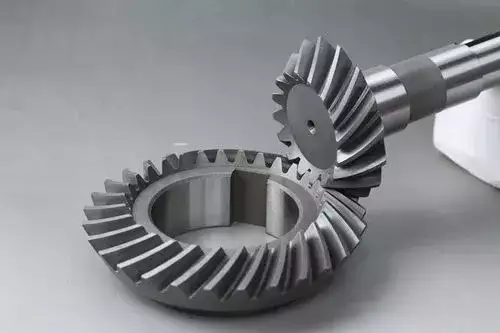
About Our Gear Manufacturing Process
At our gear manufacturing factory, we specialize in producing high-quality spiral bevel gears. Our advanced manufacturing process ensures exceptional precision and reliability. Here is a breakdown of our gear manufacturing process:
- Raw Material Preparation: We start by preparing the raw materials through processes such as forging and heat treatment. These steps ensure the materials’ optimal strength and durability.
- Rough Machining: The raw materials undergo rough machining processes such as turning, drilling, and boring to achieve the desired shape and dimensions.
- Forming Process: The gears are then subjected to gear cutting methods like gear hobbing, gear shaping, and gear skiving to form the teeth accurately.
- Semi-Finishing: To enhance the gear’s functionality, we perform operations like chamfering, keyway cutting, and deburring to remove any sharp edges or imperfections.
- Heat Treatment: The gears undergo heat treatments such as carburizing, nitriding, or quenching and tempering to improve their surface hardness and core strength.
- Finish Machining: The gears are then precisely finished through processes like gear grinding and honing to achieve the required tooth profile accuracy.
- Inspection and Quality Assurance: We conduct rigorous inspections using specialized gear testing equipment to ensure the gears meet the highest quality standards. Surface treatments are applied for improved durability.
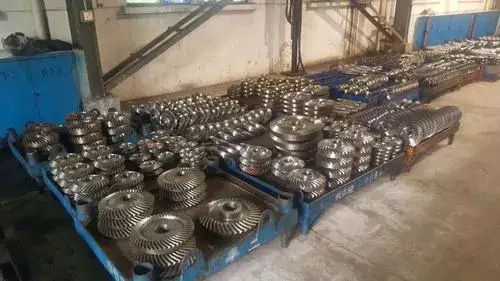
About Our Factory
We are a leading gear manufacturing factory with a strong focus on customer satisfaction and product excellence. Here are some of our key advantages:
- Extensive Expertise: With years of experience in the industry, we possess deep knowledge and expertise in gear manufacturing.
- State-of-the-Art Facilities: Our factory is equipped with advanced machinery and technology to ensure precise and efficient gear production.
- Customization Capabilities: We offer tailored solutions to meet specific customer requirements, providing gears that perfectly suit their applications.
- Quality Assurance: Our stringent quality control processes ensure that every gear we produce meets the highest standards of quality and performance.
- Competitive Pricing: We strive to offer competitive prices without compromising on the quality of our gears.
- Timely Delivery: We understand the importance of timely delivery and ensure that our customers receive their orders as scheduled.
Author: Miya