How Does Pulley Size Affect Torque?
The size of a pulley plays a pivotal role in determining the torque. Torque is essentially the rotational equivalent of linear force. It measures the force that causes an object to rotate around an axis. Herein, we delve into the intriguing relationship between pulley size and torque.
Understanding Pulleys
A pulley is a simple machine that comprises a wheel on an axle or shaft designed to support movement and direction change of a taut cable or belt. Pulleys have extensive usage in various fields, including automotive engines, industrial machinery, and construction equipment.
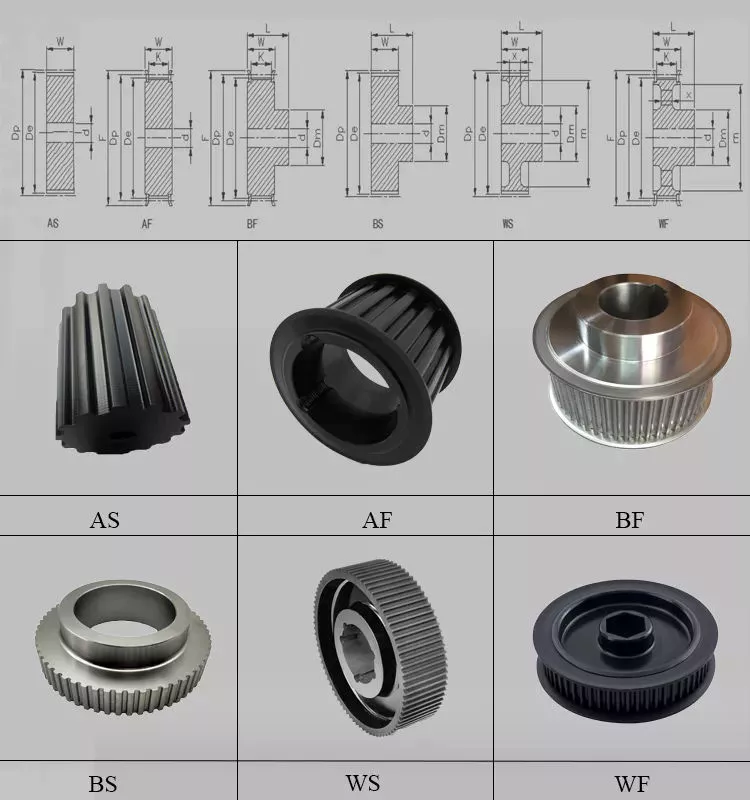
The Concept of Torque
Torque, often referred to as the moment of force, is a measure of the force that can cause an object to rotate about an axis. Simply put, the torque determines the turning effect produced by a force on a rotating system, like a pulley. The higher the torque, the greater the ability of a force to cause rotational motion.
The Relationship Between Pulley Size and Torque
Torque is directly related to the radius of the pulley. A larger pulley radius means that the torque will also be larger, assuming that the force is constant. This is because the torque equals the force applied times the distance from the center of rotation. Hence, when the pulley size, i.e., radius, increases, the torque also increases.
The Physics Behind Pulley Size and Torque
When it comes to understanding the effect of pulley size on torque, it’s crucial to consider the fundamental physics laws. The equation for torque is T = F * r, where T represents torque, F is the force applied, and r is the radius of the pulley. This equation demonstrates that if the force remains constant, an increase in the pulley size will result in an increase in torque.
Effects of Pulley Size on Mechanical Advantage
Besides affecting the torque, pulley size can also impact the mechanical advantage of a system. A larger pulley can provide a greater mechanical advantage, allowing less force to be used to move a load. This can prove beneficial in numerous applications where reducing the force required to move heavy objects is essential.

Practical Examples of Pulley Size Affecting Torque
In practical terms, you can observe the effect of pulley size on torque in various everyday situations. For instance, in a car engine, a larger pulley on the crankshaft will generate more torque, improving the vehicle’s pulling power. Conversely, a smaller pulley would decrease the torque and hence, the pulling power.
Impact of Pulley Size on Torque in Industrial Applications
In industrial settings, pulley size is often adjusted to manipulate torque to meet specific machinery requirements. For example, in conveyor belt systems, larger pulleys are often used to generate higher torque to move heavy loads. On the other hand, smaller pulleys may be employed in situations where less torque is needed.
Conclusion
In conclusion, the size of a pulley plays a significant role in determining the torque. The larger the pulley, the greater the torque, provided that the force remains constant. This fundamental principle finds vast applications in various fields, from automotive engines to industrial machines, significantly impacting their performance and efficiency.