How does gear finishing after heat treatment influence the lifespan of hypoid gears?
Title 1: Introduction to Hypoid Gears
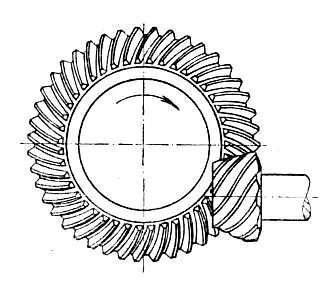
Hypoid gears are a type of bevel gears that have non-intersecting and non-parallel axes. They are commonly used in automotive and industrial applications due to their high torque transmission capabilities. In this article, we will explore the importance of gear finishing after heat treatment and its influence on the lifespan of hypoid gears.
Title 2: Understanding Gear Finishing
Gear finishing is a crucial process carried out after heat treatment to enhance the performance and durability of hypoid gears. It involves several techniques such as grinding, honing, and lapping to achieve the desired surface quality and dimensional accuracy.
Title 3: Surface Roughness and Contact Fatigue
One of the key factors affected by gear finishing is the surface roughness of hypoid gears. A smoother surface obtained through proper finishing reduces friction and wear during gear operation, thereby extending the lifespan of the gears. Additionally, it helps in reducing the occurrence of contact fatigue failures, which can lead to gear tooth breakage.
Title 4: Tooth Profile Accuracy and Load Distribution
Gear finishing also plays a significant role in ensuring the accurate tooth profile of hypoid gears. Precise tooth profiles are vital for proper load distribution, minimizing stress concentration, and avoiding premature failure. The finishing process helps in achieving the desired tooth geometry and tooth contact pattern, ensuring optimal load sharing among the gear teeth.
Title 5: Residual Stress and Gear Distortion
During heat treatment, hypoid gears undergo thermal expansion and contraction, leading to the development of residual stresses. Gear finishing helps in relieving these residual stresses, reducing the risk of gear distortion and improving the overall dimensional stability of the gears. This is crucial for maintaining the gear’s performance and ensuring smooth gear meshing.
Title 6: Lubrication and Efficiency
A well-finished surface provides better lubricant retention, ensuring sufficient oil film thickness between gear teeth. This enhances the gear’s lubrication and minimizes frictional losses, resulting in improved gear efficiency. Effective gear finishing promotes proper lubrication and reduces the likelihood of dry or boundary lubrication conditions that can contribute to gear wear and failure.
Title 7: Noise and Vibration Reduction
Proper gear finishing significantly contributes to reducing gear noise and vibration levels. By achieving high surface quality and accurate tooth profiles, gear finishing minimizes gear meshing irregularities that can generate noise and vibration during gear operation. This not only enhances the overall performance of the hypoid gears but also ensures a quieter and smoother gear system.
Title 8: Conclusion
In conclusion, gear finishing after heat treatment plays a vital role in determining the lifespan of hypoid gears. It influences factors such as surface roughness, tooth profile accuracy, residual stress, lubrication, noise, and vibration. By ensuring proper gear finishing, manufacturers can enhance the performance, durability, and reliability of hypoid gears, ultimately contributing to their extended lifespan.
——————-
About our Gear Manufacturing Factory
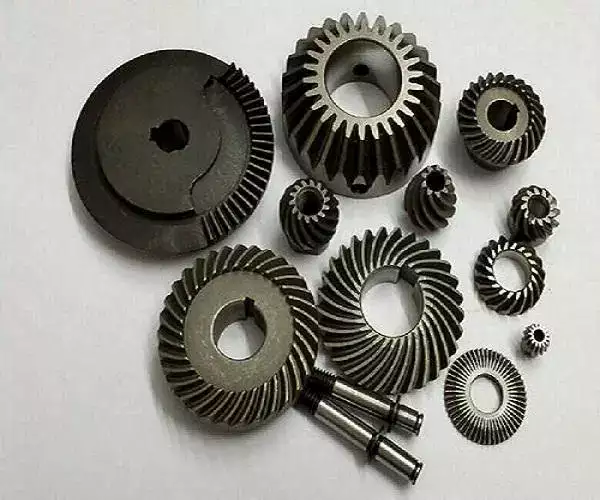
At our gear manufacturing factory, we specialize in the production of high-quality gears for various industries. With years of experience and advanced technology, we have become a trusted partner for businesses seeking reliable gear solutions.
Our gear manufacturing process involves several steps:
- Raw Material Preparation: We start with forging, followed by heat treatment to ensure the material’s strength and toughness.
- Rough Machining: Turning, drilling, and boring operations are carried out to shape the gear blanks.
- Forming Process: Gear teeth are formed using techniques such as gear hobbing, broaching, or shaving.
- Semi-Finishing: Chamfering, keyway machining, and deburring are performed to prepare the gears for further processing.
- Heat Treatment: Carburizing, nitriding, or quenching and tempering processes are employed to enhance the gears’ hardness and wear resistance.
- Finish Machining: Gear teeth are precisely ground or honed to achieve the desired tooth profile and surface finish.
- Inspection and Acceptance: Gears undergo rigorous quality checks, including gear testing and surface treatments if required.
By following this comprehensive gear manufacturing process, we ensure that our gears meet the highest standards of quality and performance.
Some advantages of choosing our factory include:
- Advanced production facilities and state-of-the-art technology
- Experienced team of engineers and technicians
- Strict quality control measures to guarantee gear precision and reliability
- Customization options to meet specific gear requirements
- Prompt delivery and efficient customer service
- Competitive pricing and cost-effective gear solutions
Partner with us for all your gear manufacturing needs and experience the difference in performance and durability.
Author: Miya