How Does A Fluid Coupling Work
The fundamental question is, how does a fluid coupling work? The simple answer is that a fluid coupling is a hydrodynamic device that is used to transmit rotating mechanical power. It does this via the transmission of rotational power through a fluid, allowing for a smooth engagement of a loaded power source.
Understanding Fluid Coupling
Before delving into the working mechanism of fluid coupling, it’s important to understand what it is. A fluid coupling, also known as a hydraulic coupling, is a device that transfers rotational power from one shaft to another using the principles of fluid dynamics. It was invented in the early 20th century and is used in different applications such as conveyor systems, marine and industrial machine drives.
Components of a Fluid Coupling
A fluid coupling consists of three main parts: the impeller, the turbine, and the casing. The impeller is connected to the input shaft and acts as the pump in the system, while the turbine is attached to the output shaft and behaves like the motor. The casing houses both the impeller and the turbine, and it’s filled with a fluid – often oil.
Working Principle of Fluid Coupling
The working process of a fluid coupling is relatively straightforward. When the input shaft or impeller rotates, it causes the fluid inside the casing to move. The moving fluid then causes the turbine or output shaft to rotate, thus transferring power from the input shaft to the output shaft. This is a simple yet effective way of transmitting power without any physical contact between the input and output shafts.
Applications of Fluid Coupling
Fluid couplings are used in various applications due to their ability to limit torque, provide load sharing, and absorb shock loads. They are widely used in automobile transmissions, marine propulsion systems, and industrial machinery.
Advantages of Fluid Coupling
There are several advantages of fluid coupling. They provide smooth power transmission, protect the system from overload, allow for controlled start-up speed, and absorb shock loads.
Maintenance of Fluid Coupling
Fluid coupling maintenance typically involves checking for leaks and ensuring the fluid level is correct. Regular inspection of the coupling components for damage or wear is also essential.
Comparison with Other Power Transmission Devices
Compared to other power transmission devices like clutches or mechanical couplings, fluid couplings offer smoother power transmission and greater protection against overload. However, they are typically more expensive and require regular maintenance.
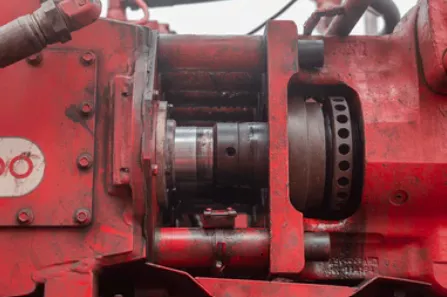
In conclusion, understanding how a fluid coupling works can be beneficial in various industrial applications. It’s a simple yet effective device for transmitting power smoothly and protecting systems from overload.
For further information or enquiries, feel free to reach out to our technical department via email. We typically respond within 24 hours.
At EVER-POWER, we are leading the coupling market in China. Our offerings primarily include Rigid Coupling and fluid coupling among others. Apart from couplings, we also provide a range of agricultural machinery parts and accept custom orders. Our products are of top-notch quality and have been well-received by clients both domestically and internationally.
 fluid coupling Factory”>