How do spiral bevel gears provide smooth rotation in heavy lifting equipment?
Introduction
Spiral bevel gears play a crucial role in heavy lifting equipment, delivering smooth rotation and ensuring efficient power transmission. In this article, we will explore the mechanisms behind the smooth rotation provided by spiral bevel gears and their significance in heavy lifting applications.
The Geometry of Spiral Bevel Gears
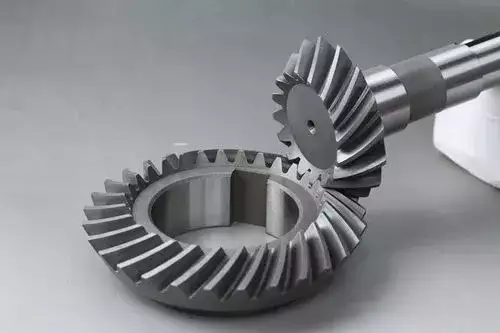
Spiral bevel gears possess a unique geometry that enables them to provide smooth rotation. Unlike straight bevel gears, which have teeth cut at right angles to the gear’s face, spiral bevel gears have teeth that are curved and spiral-shaped. This spiral arrangement allows for gradual engagement and disengagement of the gear teeth, minimizing sudden impact and ensuring a smooth transfer of power.
1. Tooth Contact Pattern Optimization
To achieve smooth rotation, it is essential to optimize the tooth contact pattern of spiral bevel gears. Through precise design and manufacturing techniques, the contact pattern between the gear teeth is carefully controlled. This optimization helps distribute the load evenly across multiple teeth, reducing stress concentration and enhancing the gear’s overall performance.
1.1 Curvature of the Tooth Surface
One key aspect of tooth contact pattern optimization is the curvature of the tooth surface. By carefully controlling the curvature, the contact area between the gear teeth can be maximized, resulting in improved load distribution and reduced frictional losses.
1.2 Tooth Profile Modifications
To further enhance the smooth rotation of spiral bevel gears, tooth profile modifications are employed. These modifications, such as crowning or tip relief, ensure proper tooth alignment and minimize tooth-to-tooth interference. By reducing contact discrepancies, the gears operate with reduced noise and vibration, enhancing their overall efficiency.
2. Lubrication and Cooling
Smooth rotation in heavy lifting equipment also relies on effective lubrication and cooling mechanisms. Spiral bevel gears require proper lubrication to reduce friction and prevent excessive wear. Lubricants create a thin film between the gear teeth, reducing contact stress and dissipating heat generated during operation. This lubricating film allows the gears to rotate smoothly, even under heavy loads.
3. Precision Manufacturing
The manufacturing process of spiral bevel gears is crucial in ensuring their smooth rotation. Precision machining techniques and advanced equipment are employed to achieve the required gear tooth geometry and surface finish. This precision manufacturing eliminates errors and irregularities, ensuring optimal performance and reduced friction.
Conclusion
In heavy lifting equipment, the smooth rotation provided by spiral bevel gears is vital for efficient and reliable operation. Through optimized tooth contact patterns, effective lubrication, and precision manufacturing, these gears deliver seamless power transmission. Their unique geometry and design make them a preferred choice for heavy lifting applications.
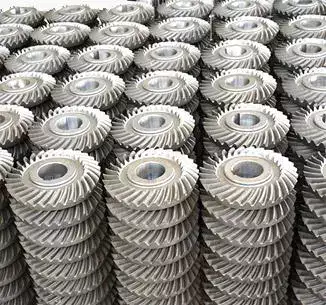
About Our Gear Manufacturing Factory
We are a professional gear manufacturing factory specializing in the production of high-quality gears. Equipped with advanced technology and a skilled workforce, we ensure the highest standards of gear production.
Our Gear Manufacturing Process and Techniques
1. Raw Material Preparation: We start by preparing the raw material through forging and heat treatment processes, ensuring superior material properties.
2. Rough Machining: The gears undergo rough machining processes such as turning, drilling, and boring to achieve the desired shape and dimensions.
3. Forming Process: Next, the gears undergo precision forming processes, including gear rolling, gear hobbing, and gear shaving. These processes ensure accurate tooth profiles and smooth surface finishes.
4. Semi-Precision Machining: The gears then undergo processes like chamfering, keyway milling, and deburring to eliminate sharp edges, create keyways, and remove burrs.
5. Heat Treatment: To enhance the gears’ strength and durability, they undergo heat treatment processes such as carburizing, nitriding, or quenching and tempering.
6. Precision Machining: The final stage involves precision machining processes like gear grinding and honing. These processes ensure the gears’ precise tooth geometry and surface finish, guaranteeing smooth rotation.
7. Inspection and Quality Assurance: Finally, the gears undergo rigorous inspection and quality assurance procedures, including gear testing and surface treatment evaluation, to ensure they meet the highest industry standards.
Why Choose Us?
– Extensive Experience: With years of experience in gear manufacturing, we have honed our skills and expertise to deliver top-quality products.
– Advanced Technology: Our state-of-the-art production facilities and advanced machinery enable us to produce gears with exceptional precision and performance.
– Customization Capabilities: We offer tailored solutions to meet specific customer requirements, providing gears that perfectly fit their applications.
– Strict Quality Control: Our stringent quality control measures ensure that every gear leaving our factory meets the highest quality standards.
– Timely Delivery: We understand the importance of timely delivery and strive to fulfill orders promptly, ensuring customer satisfaction.
Author: Miya