How do hypoid gears function in heavy-duty equipment?
Hypoid Gears: An Introduction
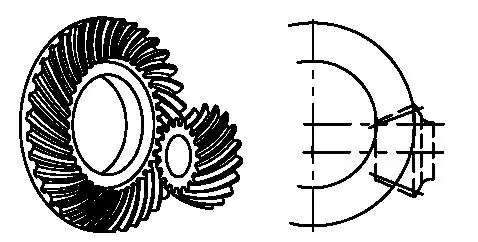
Hypoid gears are a type of spiral bevel gears that have significant applications in heavy-duty equipment. Unlike traditional straight bevel gears, hypoid gears have a crossed-axis configuration, resulting in smoother and quieter operation. Let’s delve into the functioning of hypoid gears in heavy-duty equipment.
1. Offset Axis Design
Hypoid gears feature an offset axis design, which means that the axes of the driving and driven gears do not intersect. This offset allows for greater torque transmission and load-bearing capacity.
2. Torque Conversion
One of the primary functions of hypoid gears in heavy-duty equipment is torque conversion. As the driving gear rotates, it transfers rotational force to the driven gear, amplifying the torque output. This torque amplification is crucial for heavy-duty applications that require high power and torque.
3. Smooth Power Transmission
Hypoid gears ensure smooth power transmission due to their unique tooth profiles. The gear teeth have a curved shape, allowing for gradual contact and reduced noise and vibration. This smooth power transmission is particularly important in heavy-duty equipment to minimize wear and improve overall efficiency.
4. High Load Capacity
Heavy-duty equipment often operates under extreme loads and harsh conditions. Hypoid gears are designed to handle these demanding environments. The offset axis design and robust tooth profiles enable hypoid gears to withstand high torque and transmit heavy loads without compromising performance.
5. Lubrication and Cooling
In heavy-duty equipment, hypoid gears require proper lubrication and cooling to ensure optimal performance and longevity. Lubricants are used to reduce friction and prevent wear between the gear teeth. Additionally, some hypoid gear applications incorporate cooling systems to dissipate heat generated during operation.
6. Applications in Heavy-Duty Equipment
Hypoid gears find wide-ranging applications in heavy-duty equipment, including:
- Construction machinery
- Mining equipment
- Off-highway vehicles
- Marine propulsion systems
- Wind turbine drivetrains
- Railway locomotives
- And many more
Our Gear Manufacturing Process
Here at our gear factory, we specialize in the production of high-quality gears. Our manufacturing process involves the following steps:
- Raw Material Preparation: Forging and Heat Treatment
- Rough Machining: Turning, Drilling, and Boring
- Forming Process: Gear Rolling, Gear Hobbing, and Gear Shaving
- Semi-Precision Machining: Chamfering, Keyway Cutting, and Deburring
- Heat Treatment: Carburizing, Nitriding or Quenching, and Tempering
- Precision Machining: Gear Grinding and Honing
- Inspection and Quality Assurance: Gear Testing and Surface Treatment
In this initial stage, we prepare the raw materials by forging them into the desired shape and then subjecting them to heat treatment processes to enhance their strength and durability.
We then perform rough machining operations, including turning, drilling, and boring, to shape the gears and create the necessary holes and bores.
In the forming process, we utilize various techniques such as gear rolling, gear hobbing, and gear shaving to create the precise gear teeth profiles and ensure excellent meshing characteristics.
Next, we carry out semi-precision machining operations such as chamfering, keyway cutting, and deburring to remove any sharp edges, improve gear fit, and eliminate burrs.
To further enhance the gears’ hardness and wear resistance, we subject them to heat treatment processes such as carburizing, nitriding or quenching, and tempering.
In the precision machining stage, we employ gear grinding and honing methods to achieve extremely tight tolerances and ensure superior gear surface finish.
Before the final delivery, each gear undergoes thorough inspection and quality assurance procedures. We conduct gear testing to verify dimensional accuracy, tooth profile, and surface hardness. Additionally, we apply surface treatments to provide corrosion resistance and enhance aesthetic appeal.
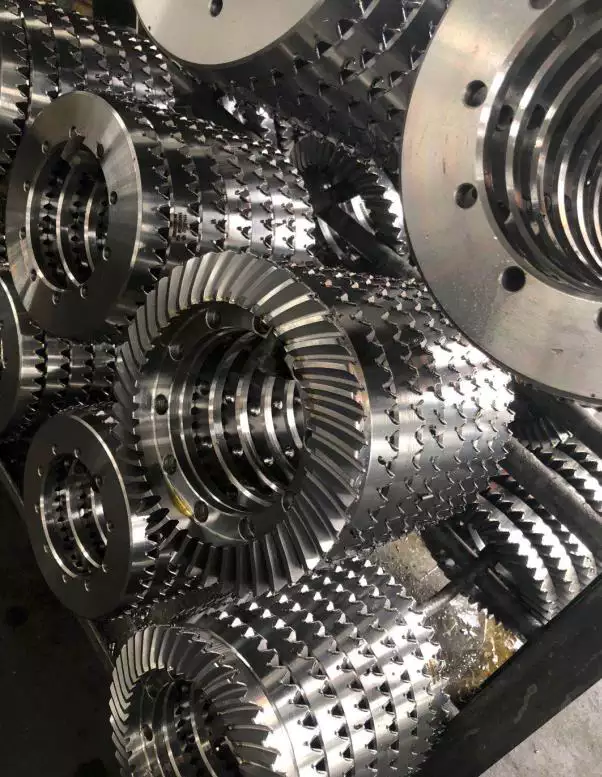
We are proud to be a leading gear manufacturing factory, utilizing advanced processes and technologies to meet our customers’ diverse requirements. Our key advantages include:
- Extensive experience in gear production
- State-of-the-art manufacturing facilities
- Highly skilled workforce
- Strict quality control measures
- Customization capabilities
- Timely delivery
- Competitive pricing
- Commitment to customer satisfaction
Partner with us for all your gear manufacturing needs and experience unmatched quality and reliability.
Author: Miya