Farm Equipment Rotary Hay Tedder for Hay Collection
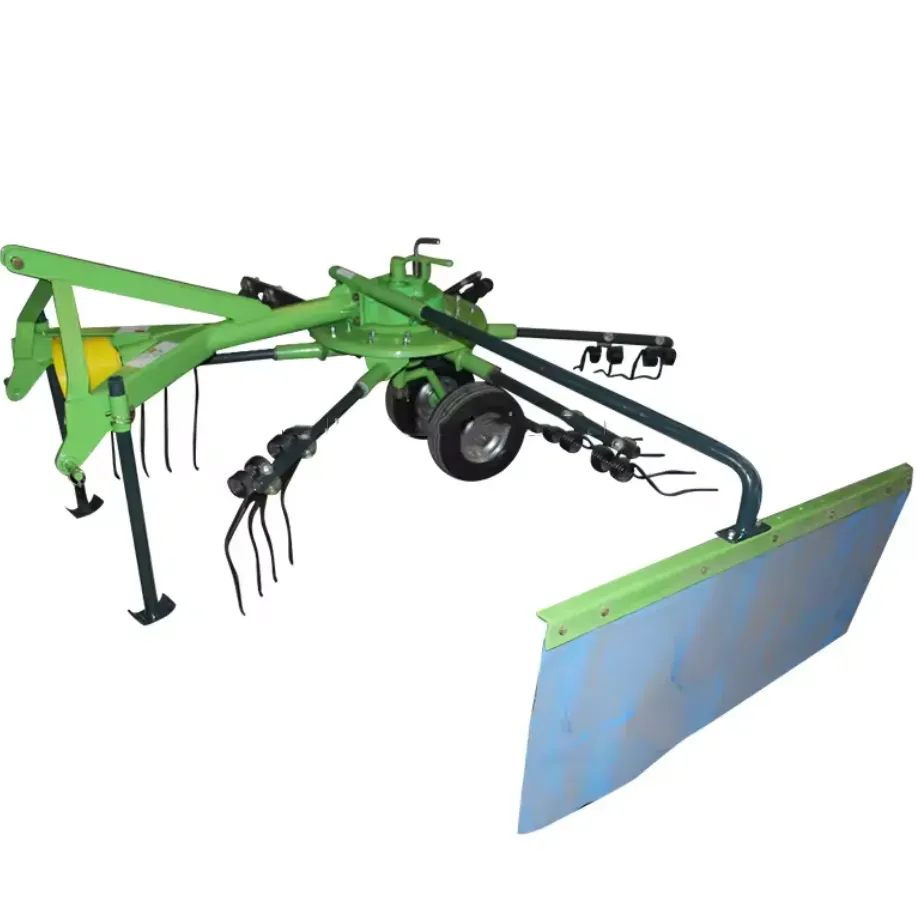
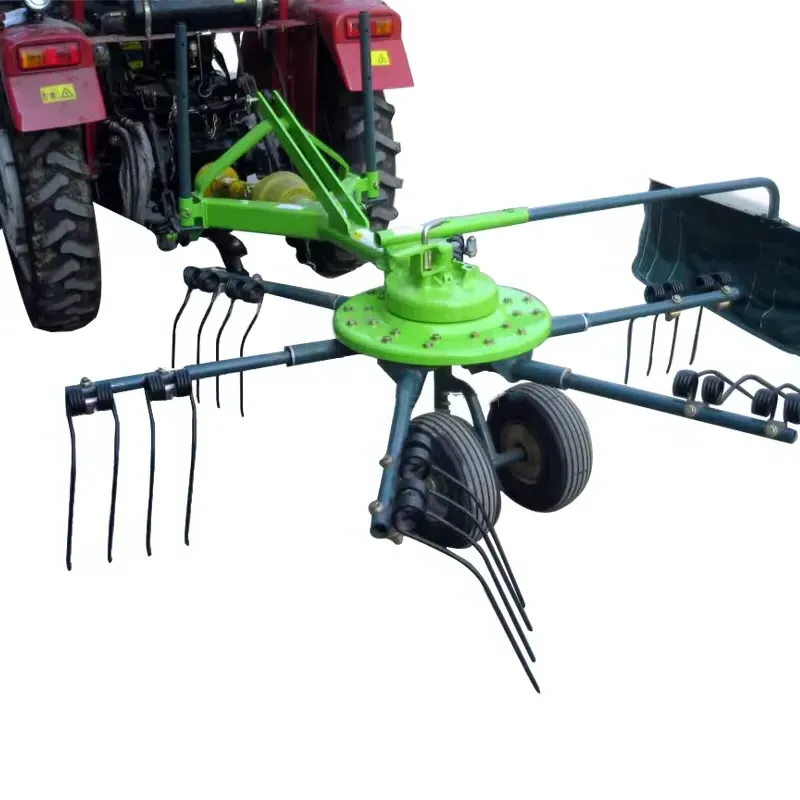
In the realm of agricultural machinery, the Farm Equipment Rotary Hay Tedder plays a crucial role in the collection and processing of hay. This innovative piece of equipment is designed to efficiently gather, fluff, and organize hay or straw for subsequent baling or collection. By utilizing rotating arms with tines and a central hub, the rotary hay tedder streamlines the haymaking process, ensuring optimal quality and efficiency. Let’s delve deeper into the features, advantages, applications, and components of this essential farm equipment.
Advantages of Farm Equipment Rotary Hay Tedder
- Enhanced Efficiency: The rotary hay tedder significantly speeds up the hay collection process, allowing farmers to cover more ground in less time.
- Improved Hay Quality: By gently lifting and moving the hay, the tedder minimizes damage to the crop, resulting in higher-quality forage for livestock.
- Consistent Windrow Formation: The tedder’s swath forming curtain ensures that the gathered hay is deposited in neat rows, facilitating easier baling or collection.
- Adaptability to Field Conditions: Height and angle adjustments enable operators to customize the tedder’s settings to suit different crop types and terrains.
- Reduced Labor Requirements: The efficient operation of the rotary hay tedder reduces the manual labor involved in haymaking, saving time and resources.
- Versatility: Farm Equipment Rotary Hay Tedder can be used for both raking and tedding functions, offering flexibility in hay processing.
Applications of Farm Equipment Rotary Hay Tedder
- Haying Operations: The tedder is essential for gathering, fluffing, and organizing hay or straw in preparation for baling or collection.
- Forage Preservation: By ensuring proper windrow formation, the tedder aids in the preservation of forage quality during storage.
- Hay Drying: The tedder helps aerate the hay, promoting quicker and more even drying, which is crucial for maintaining forage quality.
- Harvest Efficiency: Properly tedded hay facilitates efficient subsequent harvesting processes, reducing time and labor requirements.
- Field Maintenance: The rotary hay tedder can also be used to maintain field cleanliness and organization, enhancing overall farm operations.
- Livestock Feeding: High-quality hay produced with the tedder ensures nutritious feed for livestock, supporting their health and productivity.
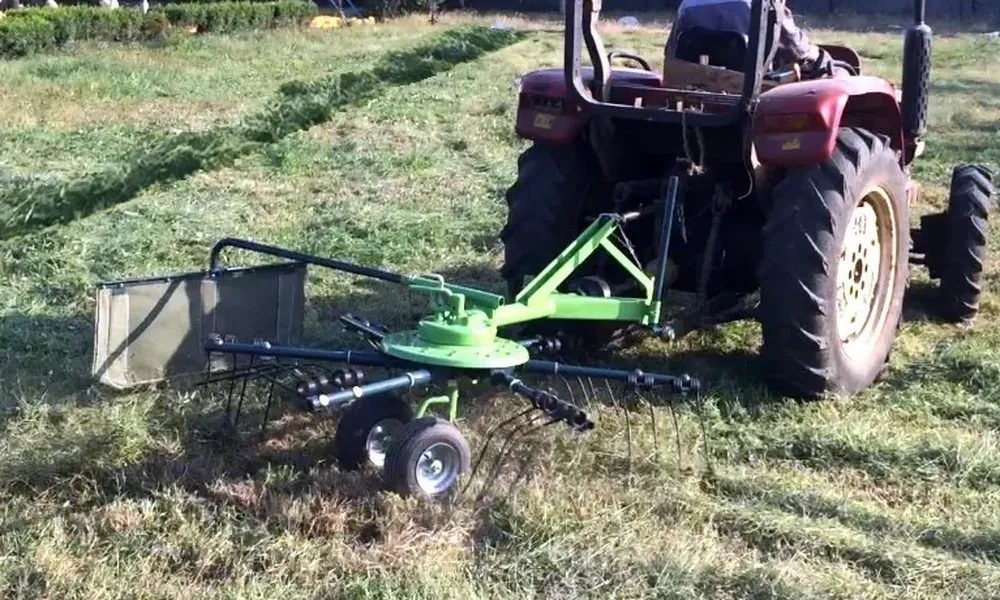
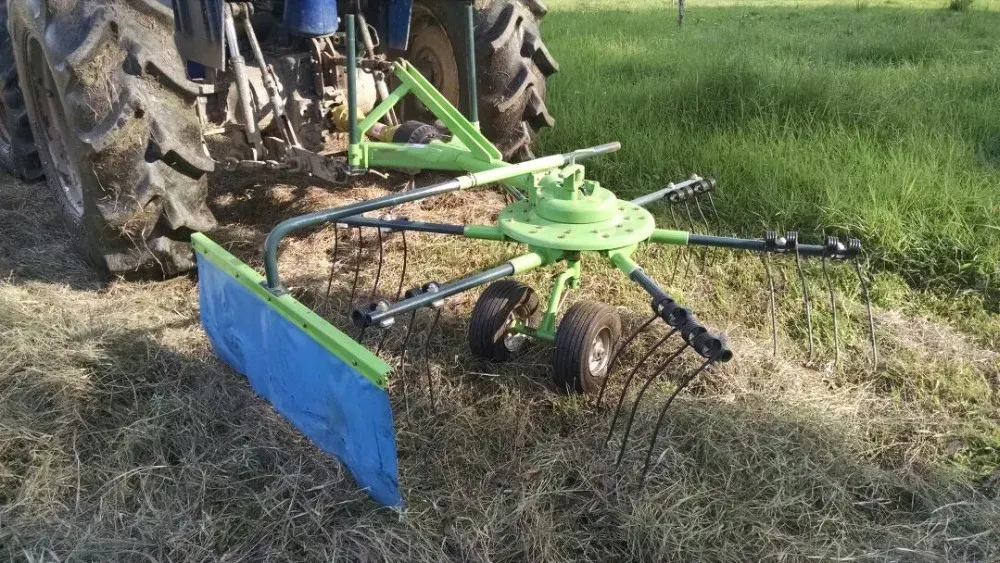
Key Components of Farm Equipment Rotary Hay Tedder
A rotary hay tedder typically consists of several key components that work together to efficiently gather and fluff hay or straw in agricultural operations. Here are some of the essential components:
- Rotary Arms and Tines: The rotary arms are equipped with tines that sweep the hay into windrows.
- Central Rotating Hub: At the core of the tedder is the central rotating hub, which drives the motion of the arms.
- Height Adjustment Mechanism: The height adjustment mechanism allows operators to set the optimal working height of the tedder.
- Swath Forming Curtain: The swath forming curtain guides the gathered hay into neat windrows.
- PTO Shaft and Gearbox: The PTO shaft transfers power from the tractor to the tedder’s gearbox.
- Frame and Hitch System: The frame provides structural support, while the hitch system connects the tedder securely to the tractor.
- Transport Wheels: Transport wheels facilitate easy movement and maneuverability of the tedder.
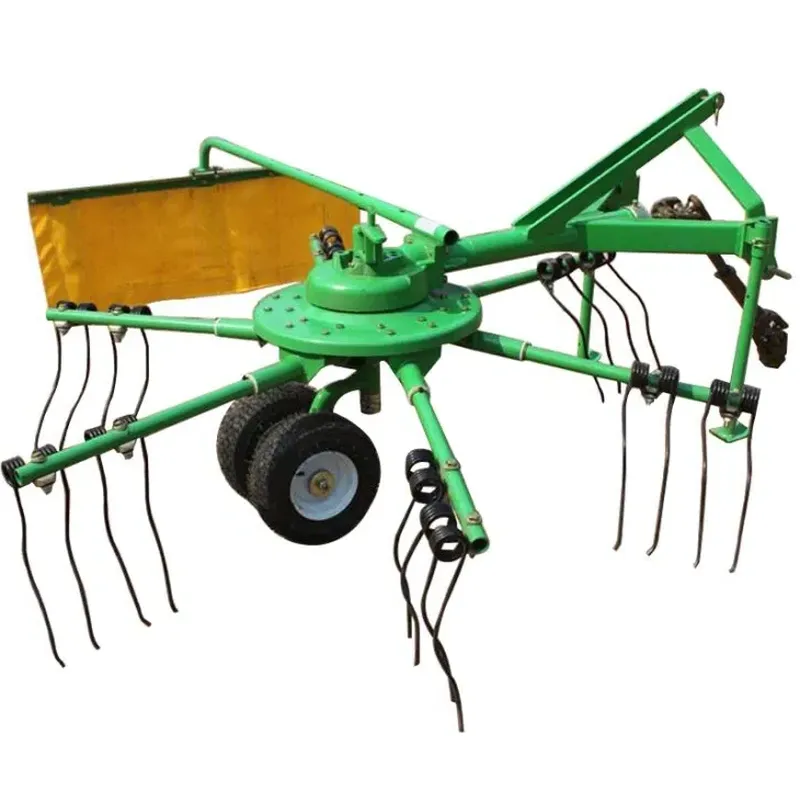
Working Principle of Farm Equipment Rotary Hay Tedder
A tractor PTO driven rotary hay tedder is a common agricultural implement used for raking and tedding straw in haymaking processes. Here’s a brief explanation of how it typically works:
- Power Transmission: The tractor’s power take-off (PTO) shaft transmits engine power directly to the rotary hay tedder.
- Rotation of Arms and Tines: The power from the PTO turns the central hub, causing the arms equipped with tines to rotate.
- Raking Process: During raking, the tines collect the cut hay or straw and form it into neat windrows.
- Tedding Function: For tedding, the tedder’s settings are adjusted to spread the hay instead of gathering it.
- Height and Angle Adjustments: Operators can adjust the height and angle of the tedder to accommodate varying field conditions and crop types.
- Swath Formation: The tedder uses a swath forming curtain to guide the raked material into uniform rows.
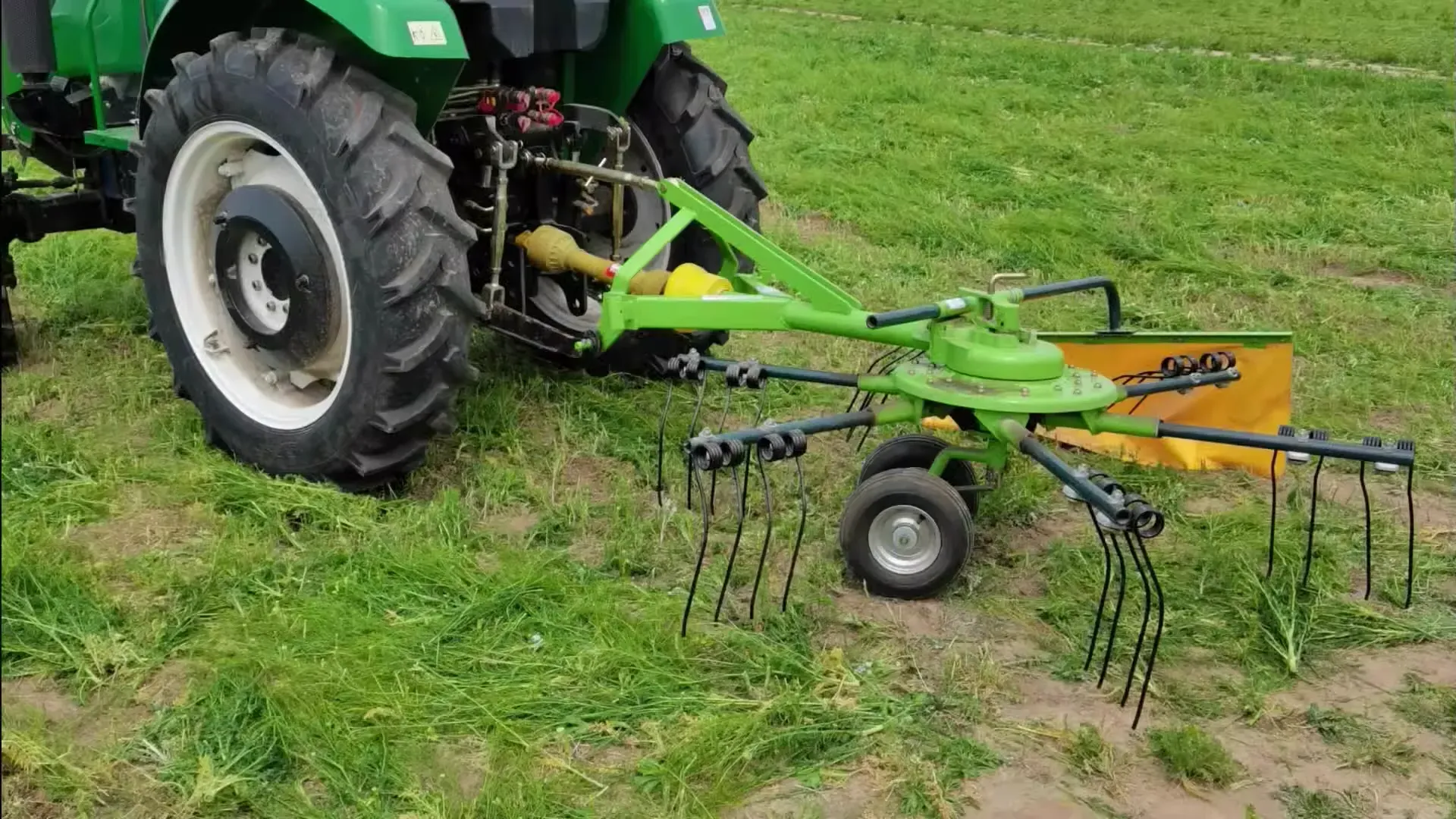
Installation Steps of Farm Equipment Rotary Hay Tedder
Installing a 3 point hitch PTO driven rotary hay tedder to a tractor involves several steps to ensure proper attachment and operation. Here is a general guide on how to install a rotary hay tedder on a tractor:
- Position the Tractor and Tedder: Park the tractor on a flat, stable surface and ensure it is turned off.
- Attach Lower Link Arms: Connect the tractor’s lower link arms to the tedder’s hitch points.
- Connect the Top Link: Adjust the top link of the 3-point hitch to align with the tedder’s top connection point.
- Adjust the Stabilizers: Tighten or adjust the tractor’s stabilizers to prevent side-to-side movement of the tedder.
- Connect the PTO Shaft: Attach the tedder’s PTO shaft to the tractor’s PTO output.
- Test the Installation: Start the tractor and engage the PTO at a low speed to ensure proper operation.
Why Choose EVER-POWER’s Rotary Hay Rakes?
EVER-POWER is a renowned manufacturer and supplier specializing in the production and sales of rotary hay rakes. With a robust infrastructure and cutting-edge technology, we have established ourselves as an industry leader. Our rotary hay rakes are designed to serve as perfect replacements for renowned brands such as John Deere, New Holland, Kuhn, and more. These rakes are engineered for efficiency and durability, offering exceptional performance in various agricultural settings. EVER-POWER takes pride in its expertise and influence in the rotary hay rake sector, delivering high-quality products and comprehensive after-sales service to ensure customer satisfaction.
Author: Yjx