Can you explain the different types of spline shafts?
Introduction
Before we dive into the different types of spline shafts, let’s first understand what a spline shaft is. A spline shaft is a mechanical component used to transmit torque in various applications, such as automotive, aerospace, and industrial machinery. It consists of a series of ridges or teeth, called splines, which fit into corresponding grooves to achieve a secure and efficient power transmission.
1. Involute Spline Shafts
An involute spline shaft is one of the most common types of spline shafts used in engineering. It features teeth with an involute profile, which allows for smooth and uniform distribution of torque along the shaft. The involute shape also provides self-centering capabilities, ensuring proper alignment between mating components.
2. Straight Spline Shafts
Straight spline shafts, as the name suggests, have straight-sided splines that run parallel to the shaft axis. These splines offer simplicity in design and manufacturing, making them cost-effective for many applications. However, straight spline shafts may experience higher stress concentration at the spline roots compared to other types.
3. Helical Spline Shafts
Helical spline shafts are similar to straight spline shafts but with splines that have a helical shape. The helix angle provides increased contact area between the mating components, resulting in higher torque capacity and better resistance to axial forces. This type is often used in heavy-duty applications where reliability and load-bearing capabilities are crucial.
4. Ball Spline Shafts
Ball spline shafts incorporate recirculating ball bearings within the splines, allowing for smooth linear motion in addition to torque transmission. This design enables high accuracy, low friction, and enhanced resistance to misalignment. Ball spline shafts are commonly used in precision machinery, such as CNC systems and robotics.
5. Serrated Spline Shafts
Serrated spline shafts feature splines with serrated teeth, which provide improved load distribution and resistance to slippage. The serrations act like interlocking fingers, enhancing the overall strength and rigidity of the shaft. This type is often used in heavy-duty applications where high torque and shock resistance are required.
6. Crowned Spline Shafts
Crowned spline shafts have a slightly curved spline profile, resembling a crown. This design allows for misalignment compensation and improved contact between mating components, reducing stress concentration and wear. Crowned spline shafts are commonly used in applications where shaft misalignment is expected, such as in automotive drivetrains.
Conclusion
Spline shafts come in various types, each designed to cater to specific applications and requirements. Whether it’s the smooth torque transmission of involute spline shafts, the cost-effectiveness of straight spline shafts, or the precision motion of ball spline shafts, choosing the right type is essential for optimal performance and reliability in mechanical systems.

Our company specializes in the production and sales of various types of gears and spline shafts. With years of experience and expertise in the field, we take pride in offering high-quality products to our customers. Here are five key advantages of choosing our company:
- Advanced Manufacturing Technology: We employ state-of-the-art manufacturing technology to ensure the precision and durability of our spline shafts.
- Wide Range of Options: We offer a diverse range of spline shafts, catering to different specifications and requirements of our customers.
- Strict Quality Control: Each spline shaft undergoes rigorous quality control measures to guarantee its performance and reliability.
- Competitive Pricing: Our products are competitively priced without compromising on quality, offering our customers great value for their investment.
- Excellent Customer Service: We prioritize customer satisfaction and provide exceptional after-sales support, ensuring a seamless experience for our clients.
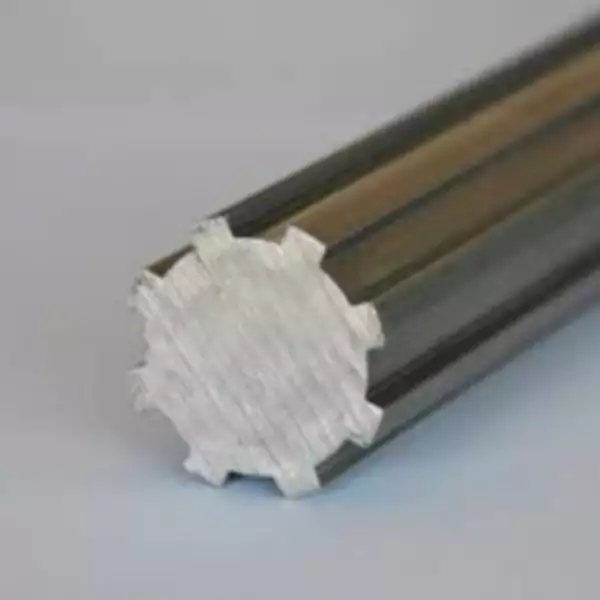
Spline Shaft Working Principle and Function
The spline shaft is a key component used in various mechanical applications. It consists of a series of ridges or teeth, which fit into corresponding grooves on other mating parts. This interlocking mechanism allows for the efficient transfer of torque and rotational motion between the shaft and the connected components. The spline shaft’s design ensures a secure and reliable connection, enabling smooth and precise operation of the machinery.
Spline Shaft Design and Selection Guide
When it comes to designing and selecting spline shafts, several factors need to be considered. These include the material, dimensions, tooth profile, and load capacity. Our team of experts can provide valuable guidance in choosing the right spline shaft for your specific application. We take into account factors such as torque requirements, environmental conditions, and expected lifespan to ensure optimal performance and longevity.
Spline Shaft Manufacturing and Processing Techniques
The manufacturing and processing of spline shafts require specialized techniques to achieve accurate dimensions and high-quality surface finishes. Our company utilizes advanced machinery and precision tools to produce spline shafts with tight tolerances and superior surface integrity. Our skilled technicians follow stringent manufacturing procedures to ensure consistent quality and adherence to customer specifications.
Spline Shaft Applications and Industry Practices
Spline shafts find application in various industries, such as automotive, aerospace, machinery, and robotics. They are commonly used in power transmission systems, steering mechanisms, gearboxes, and other rotational motion applications. Our spline shafts have been extensively utilized in diverse industrial settings, earning positive feedback and recognition for their reliable performance and durability.
Partnering with our company means gaining access to top-quality spline shafts and exceptional service. We are committed to meeting our customers’ needs and exceeding their expectations. Contact us today to explore how we can collaborate and contribute to the success of your projects.
Author: Miya