Assessing Vibration Isolation Performance of Hollow Rotary Actuators
Introduction
Hollow rotary actuators are becoming increasingly popular in the manufacturing industry due to their efficient and precise performance. However, one of the key challenges in their design and operation is assessing their vibration isolation performance. In this article, we will explore the factors that affect the vibration isolation performance of hollow rotary actuators and how to assess their effectiveness.
Design Considerations for Hollow Rotary Actuators
The design of a hollow rotary actuator is a crucial factor that determines its vibration isolation performance. The following are some of the key design considerations:
| Design Consideration | Description |
|---|---|
| Stiffness of the Structure | The stiffness of the structure is critical to the vibration isolation performance of the rotary actuator. A stiffer structure will provide better isolation from vibrations. |
| Mass of the Structure | The mass of the structure can also affect the vibration isolation performance. A heavier structure can provide better isolation from vibrations. |
| Vibration Damping Material | The use of vibration damping material can significantly improve the vibration isolation performance of the rotary actuator. The damping material absorbs the vibrations and reduces their impact on the actuator. |
| Alignment of Components | The alignment of the components is crucial to achieving the desired performance of the rotary actuator. Any misalignment can cause vibrations and affect the performance of the actuator. |
Assessing Vibration Isolation Performance
The vibration isolation performance of a hollow rotary actuator can be assessed by measuring the amplitude and frequency of the vibrations it produces. The following are some of the methods used to assess the vibration isolation performance of rotary actuators:
- Frequency Response Function (FRF) Analysis: This method involves measuring the FRF of the rotary actuator and comparing it to the desired FRF. The FRF is a measure of the output of the actuator in response to a given input, and it can help to identify any deviations from the desired performance.
- Modal Analysis: This method involves measuring the natural frequencies and mode shapes of the rotary actuator. The natural frequencies are the frequencies at which the actuator resonates, and the mode shapes describe how the actuator vibrates at those frequencies. Modal analysis can help to identify any modes of vibration that may affect the performance of the actuator.
- Vibration Isolation Efficiency: This method involves measuring the vibration isolation efficiency of the rotary actuator. The vibration isolation efficiency is a measure of the actuator’s ability to isolate vibrations from the environment. It can be calculated by comparing the input and output vibrations of the actuator.
Our Company
At our company, we specialize in the design, development, manufacturing, and sales of servo electric cylinders, servo pressure machines, and other servo stamping equipment. Our team of professionals includes designers, processors, assemblers, sales, and after-sales service teams. Our products include servo cylinders, servo pressure machines, electric push rods, electric slides, multi-degree-of-freedom platforms, and other servo stamping equipment.
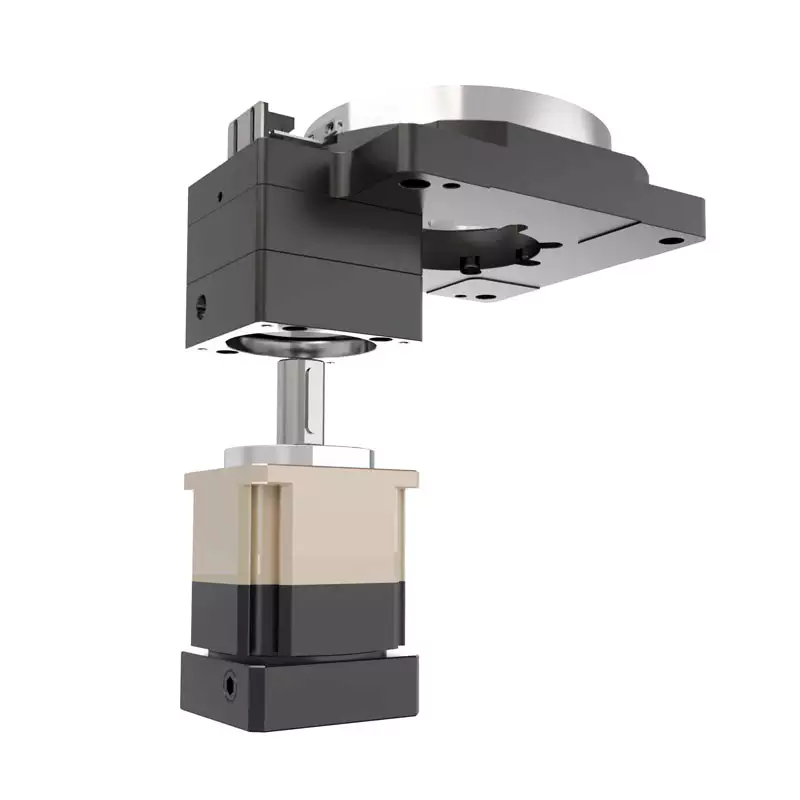
Design and Selection Considerations for Hollow Rotary Actuators
The design and selection of a hollow rotary actuator play a crucial role in its performance. The following are some of the key factors that should be considered when designing and selecting a hollow rotary actuator:

- Load Capacity: The load capacity of the hollow rotary actuator should be carefully considered based on the application’s requirements. It should be able to handle the load without compromising the performance or stability of the actuator.
- Rotational Speed: The rotational speed of the actuator should also be considered based on the application’s requirements.
- Accuracy: The accuracy of the actuator is critical to achieving the desired performance. It should be able to achieve the required accuracy without compromising the stability or performance of the actuator.
- Environmental Conditions: The environmental conditions in which the actuator will operate should also be considered. The actuator should be able to withstand the conditions without compromising its performance or stability.
Conclusion
The vibration isolation performance of a hollow rotary actuator is critical to achieving the desired performance and stability. The design and selection of the actuator play a crucial role in its vibration isolation performance. By carefully considering the design and selection considerations, it is possible to achieve the desired performance and stability.
Join Us Today
Join our team today and experience our world-class servo products and services. We are committed to providing our customers with the best quality products and services to meet their needs. Contact us today to learn more about our products and services.
Author: Miya