Are there any specific modifications needed for worm gears in food processing equipment?
Worm gears play a crucial role in food processing equipment, ensuring efficient and reliable operation. In this article, we will explore the various aspects of worm gears in food processing equipment and discuss any specific modifications required. Let’s dive into the details:
1. Material Selection for Worm Gears
Choosing the right material for worm gears is essential to ensure compatibility with food processing requirements. Stainless steel, such as AISI 316, is widely preferred due to its corrosion resistance and hygienic properties. The use of food-grade lubricants further enhances the gear’s performance.
2. Lubrication and Sealing
Proper lubrication and sealing are vital for worm gears in food processing equipment. Food-grade lubricants with high temperature resistance and extended service life are necessary to maintain smooth operation. Effective sealing prevents contamination and ensures hygiene standards are met.
3. Sanitary Design Considerations
Food processing equipment demands a sanitary design to prevent bacterial growth and ensure easy cleaning. Worm gears should have smooth surfaces, minimal crevices, and be designed according to industry standards, such as the European Hygienic Engineering and Design Group (EHEDG) guidelines.
4. Special Coatings and Finishes
Applying special coatings and finishes to worm gears can improve their performance and durability. For example, PTFE (Polytetrafluoroethylene) coatings reduce friction, increase wear resistance, and prevent food adhesion. Anodizing or electroless nickel plating may also be used for corrosion protection.
5. Hygienic Sealing Solutions
Ensuring proper sealing between the worm gear and other components is crucial for maintaining hygiene standards. Hygienic sealing solutions, such as radial shaft seals or labyrinth seals, can prevent food particles from entering critical areas and minimize the risk of contamination.
6. Compliance with Regulatory Standards
Worm gears used in food processing equipment must comply with various regulatory standards, such as those set by the Food and Drug Administration (FDA) or the European Union’s Regulation (EC) No 1935/2004. Meeting these standards ensures the safety and quality of the processed food.
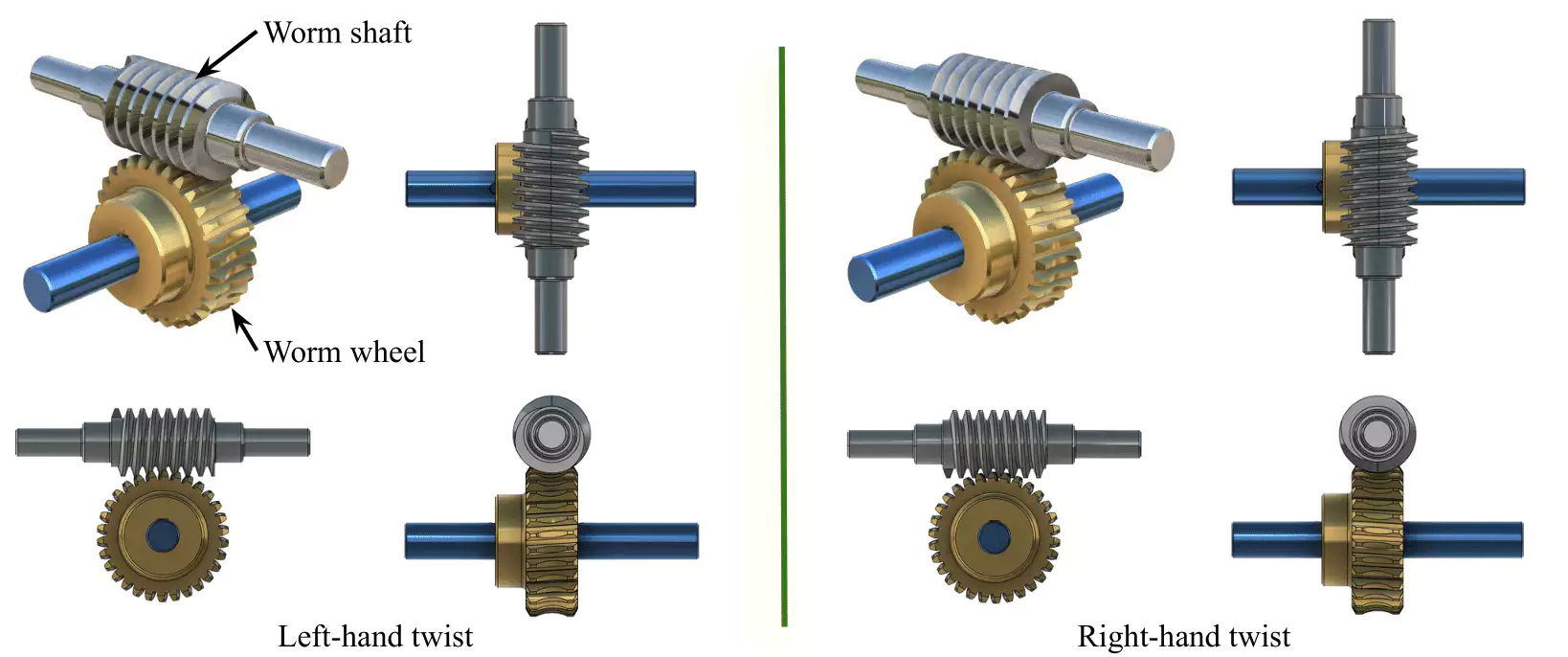
Now, let’s delve into the basic construction, working principles, and application scope of worm gears:

Basic Construction
Worm gears consist of two main components: a worm (also known as a threaded shaft) and a worm wheel (a toothed gear). The worm has a spiral thread that meshes with the teeth on the worm wheel, resulting in a compact and efficient gear system.
Working Principles
When the worm rotates, it transfers rotational motion to the worm wheel. The angled thread of the worm allows for a high gear ratio, making worm gears ideal for applications requiring speed reduction and high torque transmission. The sliding action between the worm and worm wheel results in self-locking, preventing reverse motion.
Application Scope
Worm gears find extensive use in various industries, including food processing, packaging, conveyors, and automotive applications. Their ability to provide high torque and shock load resistance makes them suitable for heavy-duty machinery and equipment.
Now, let’s explore the advantages of worm gears compared to other types of gears:
Advantages of Worm Gears
- 1. High Gear Ratio: Worm gears offer significant speed reduction in a single stage, allowing for compact designs and precise control.
- 2. High-Torque Transmission: The sliding action between the worm and worm wheel enables efficient torque transmission, making them suitable for heavy-duty applications.
- 3. Self-Locking: Worm gears exhibit self-locking characteristics, preventing reverse motion without the need for additional braking mechanisms.
- 4. Quiet Operation: The sliding action of the worm gear reduces noise levels, making them suitable for applications requiring low noise emissions.
- 5. Compact Design: Due to their high gear ratio, worm gears can achieve substantial speed reduction in a compact form factor, saving space in equipment design.
Our company specializes in the production and sale of various types of gears, including worm gears. We offer a wide range of customizations to meet specific application requirements. Our custom process includes:
Customization Process
- 1. Requirement Analysis: We thoroughly analyze customer requirements to understand their specific needs and application demands.
- 2. Design and Engineering: Our experienced team designs and engineers customized worm gears, considering factors like material selection, lubrication, sealing, and sanitary design.
- 3. Prototyping: We create prototypes of the customized worm gears to validate their performance and ensure they meet customer expectations.
- 4. Manufacturing: Once the design is approved, we commence production using high-quality materials and advanced manufacturing techniques.
- 5. Quality Assurance: Our rigorous quality control measures ensure that every worm gear meets the highest standards of performance and reliability.

Our Advantages
- 1. Extensive Experience: With over 20 years in the industry, we have gained extensive knowledge and expertise in producing high-quality gears.
- 2. Cutting-Edge Technology: Our state-of-the-art manufacturing facilities and advanced technologies enable us to deliver gears with precision and efficiency.
- 3. Customization Capabilities: We offer a wide range of customization options to meet unique requirements and provide tailored solutions.
- 4. Quality Assurance: Our strict quality control measures ensure that every gear meets the highest standards of performance and durability.
- 5. Customer Satisfaction: We prioritize customer satisfaction and strive to exceed expectations with our products and services.
Partner with us for your gear needs and experience the excellence we deliver. Contact us today to discuss your requirements and explore how our gear solutions can benefit your business.
Author: Miya