What is an Agricultural Fertilizer Spreader?
An Agricultural Fertilizer Spreader is a piece of essential machinery used in farming and agriculture. It is designed to distribute fertilizers, both granular and liquid, evenly across the field. This results in a balanced nutrient supply to crops, thereby enhancing growth and yield. The use of a spreader ensures that the fertilizers are distributed efficiently, reducing waste and ensuring optimal crop growth.
Advantages of an Agricultural Fertilizer Spreader
The Agricultural Fertilizer Spreader has a host of benefits that make it an indispensable tool in modern farming. They include:
- Efficient distribution of fertilizers, ensuring even coverage and optimal use of fertilizers.
- Reduces labor cost and time as it spreads fertilizers faster than manual methods.
- Improves crop yield by ensuring consistent nutrient distribution.
- Comes in different sizes and capacities to suit different farm sizes and needs.
- Potential for precision farming, with adjustable settings for accurate application.
- Can be used for spreading other materials like seeds, lime, and pesticides.
At EVER-POWER, we manufacture high-quality Agricultural Fertilizer Spreaders designed for efficiency and durability.
Applications of Agricultural Fertilizer Spreaders
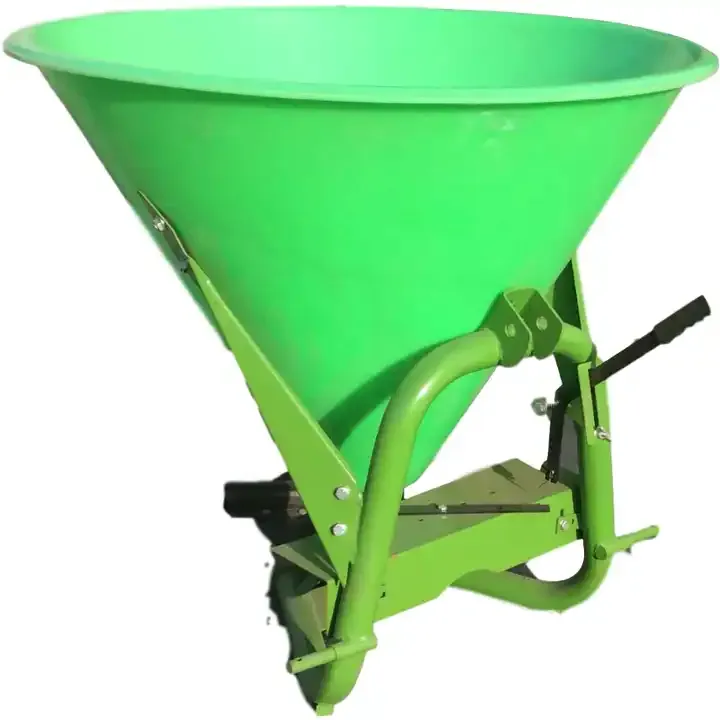
The Agricultural Fertilizer Spreader is versatile equipment with numerous applications. Some of these include:
- Use in farms and agricultural fields for spreading fertilizers.
- Application in orchards and vineyards for nutrient distribution.
- Use in pasture lands and grass fields for maintaining soil fertility.
- Application in horticulture and landscaping activities.
- Use in sports fields and golf courses for maintaining grass health.
- Application in construction sites for soil stabilization and reclamation.

Working Principle of the Tractor Mounted Fertilizer Spreader
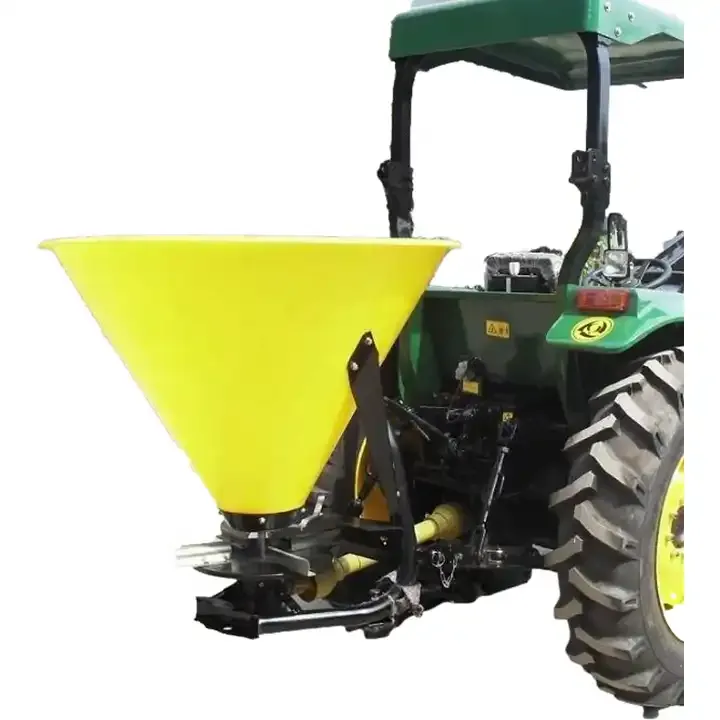
The working principle of a tractor-mounted fertilizer spreader involves several key components and mechanisms to efficiently distribute fertilizer over agricultural land. This process ensures even coverage and optimizes the use of fertilizers for crop growth. Here’s a step-by-step explanation of how it works:
- Attachment and Power Source: The spreader is attached to the tractor, usually at the three-point hitch, making it a part of the tractor’s overall machinery. It operates using the tractor’s power, often through a PTO shaft that transfers the tractor’s mechanical power to the spreader.
- Hopper: The primary component of the spreader is the hopper, where the fertilizer is stored before being distributed. Hoppers are designed to prevent moisture from affecting the fertilizer and may come in various sizes to suit different operational scales.
- Conveyor System: A conveyor system or feeding mechanism is present at the bottom of the hopper. This system regulates the flow of fertilizer from the hopper to the spinning disc(s) or broadcast mechanism. The rate of flow can often be adjusted to control the application rate of the fertilizer.
- Spinning Disc(s) and Broadcast Mechanism: The heart of the spreader is the spinning disc(s) at the bottom or rear, which receives fertilizer from the conveyor. As the disc spins (powered by the PTO or a hydraulic system), it flings the fertilizer outward in a uniform pattern. Some spreaders might use alternative broadcasting mechanisms, like pendulum spreaders, which sway side-to-side to distribute fertilizer.
- Adjustment and Control: Operators can adjust the spreading pattern and width by modifying the disc speed, the angle of the vanes on the disc, or the rate of fertilizer feed from the hopper. This allows for precise control over where and how much fertilizer is applied.
- Calibration: Calibration is crucial for the effective use of a fertilizer spreader. Before starting, the operator must calibrate the spreader to ensure the correct amount of fertilizer is applied over a specific area. This involves setting the flow rate and testing the distribution pattern to avoid over or under-fertilization.
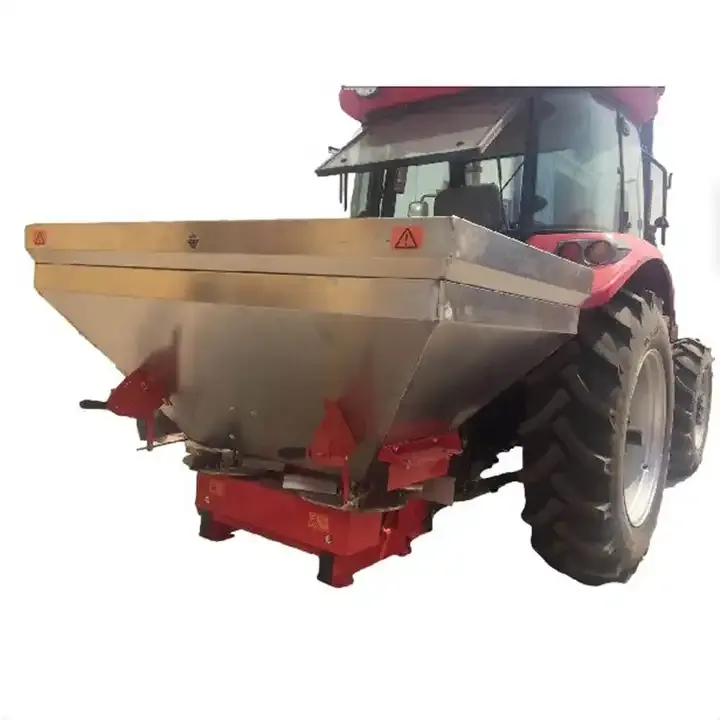

Types of Tractor Mounted Fertilizer Spreaders
There are several types of tractor-mounted fertilizer spreaders available, each designed for specific applications and varying in their spreading mechanisms. Here are some common types:
- Broadcast Spreaders: Broadcast spreaders are the most commonly used type of fertilizer spreaders. They distribute fertilizer in a wide and even pattern, covering a large area. Broadcast spreaders typically use a spinning disc mechanism or a series of rotating fins to fling the fertilizer outward. They are suitable for spreading fertilizers, seeds, and other granular materials.
- Drop Spreaders: Drop spreaders deposit the fertilizer directly beneath the spreader as the tractor moves forward. They have a series of openings or chutes through which the fertilizer is released in a controlled manner. Drop spreaders provide more precise application and are often used in situations where accuracy is crucial, such as when working near delicate plants or in narrow rows.
- Pendulum Spreaders: Pendulum spreaders use a pendulum-like mechanism to distribute the fertilizer. They have a swinging arm with a spreading plate or a series of fins attached to it. As the tractor moves forward, the swinging arm swings back and forth, creating a spreading motion. Pendulum spreaders are known for their accuracy and ability to distribute fertilizer evenly, making them suitable for both small and large fields.
- Spinner Spreaders: Spinner spreaders, also known as centrifugal spreaders, rely on a spinning disc to spread the fertilizer. The spinning disc throws the fertilizer outward using centrifugal force. Spinner spreaders are versatile and can handle a wide range of fertilizers, including granular, powdered, or pelletized forms. They are commonly used in large-scale agricultural operations.
- Pneumatic Spreaders: Pneumatic spreaders, also referred to as air seeders or pneumatic applicators, use compressed air to propel the fertilizer particles out of the spreader. They have a fan or blower that creates the air stream, which carries the fertilizers and distributes them evenly. Pneumatic spreaders are commonly used for precise seeding and fertilization of crops, especially in no-till or minimum tillage systems.
- Manure Spreaders: Specifically designed to distribute manure over agricultural land. These can be box spreaders, which use a chain-and-flap mechanism to spread solid manure, or liquid manure spreaders that use pumps and hoses. Essential for organic farming and for farms looking to recycle nutrients effectively.

Installation Steps of the Tractor Mounted Fertilizer Spreader
Installing a tractor-mounted fertilizer spreader is a straightforward process that ensures the equipment is securely attached to the tractor and ready for efficient and effective fertilization tasks. Here’s a detailed guide to assist you through each step of the installation:
- Prepare the tractor: Ensure that the tractor is in good working condition and compatible with the fertilizer spreader. Check the tractor’s hitch system and ensure it is properly maintained. Park the tractor on a level surface and position the fertilizer spreader behind the tractor. Align the spreader’s hitch with the tractor’s hitch.
- Attach the spreader to the tractor: Lower the tractor’s hitch mechanism (three-point hitch or other hitch system) and connect it to the spreader’s hitch. Ensure that the connection is secure and that the spreader is properly aligned with the tractor.
- Connect the power take-off (PTO): Locate the PTO shaft on the tractor and the corresponding input point on the spreader. Align the splines of the PTO shaft with the input point and attach them together. Ensure that the PTO connection is secure and properly locked.
- Check hydraulic or electrical connections (if applicable): If the spreader requires hydraulic or electrical connections to operate the spreading mechanism or other features, ensure that these connections are properly made according to the manufacturer’s instructions. This may involve connecting hydraulic hoses or electrical cables to the tractor’s hydraulic or electrical systems.
- Adjust the spreading mechanism: Depending on the type of spreader, there may be adjustments required for the spreading width, pattern, or rate. Consult the spreader’s manual to understand the specific adjustments needed and make them accordingly. This may involve adjusting deflector plates, calibrating the spreading rate, or setting the spreading pattern.
- Test the spreader: Before using the spreader in the field, perform a test run to ensure that it is functioning correctly. Check that the spreading mechanism is rotating smoothly, the fertilizer is being dispensed properly, and the spreading pattern is as desired.
Operation Precautions of the 3-point Mounted Fertilizer Spreaders
When operating a 3-point mounted fertilizer spreader, there are several precautions to observe to ensure safe and effective use. Here are some operation precautions specific to 3-point mounted fertilizer spreaders:
- Ensure proper tractor compatibility: Verify that your tractor is compatible with the 3-point hitch system required by the fertilizer spreader. Check the tractor’s specifications and ensure that it has the appropriate hitch category and lifting capacity to handle the spreader.
- Check hitch connections: Before attaching the spreader to the tractor’s 3-point hitch, inspect the hitch components for any damage or wear. Ensure that the hitch pins, latches, and locking mechanisms are secure and in good condition. Use the appropriate pins or latches provided by the manufacturer and ensure they are properly inserted and locked.
- Distribute weight evenly: When attaching the spreader to the 3-point hitch, make sure the weight is evenly distributed. Uneven weight distribution can affect the stability and maneuverability of the tractor. Follow the manufacturer’s guidelines for proper weight distribution and positioning of the spreader on the hitch.
- Adjust hitch height: Adjust the 3-point hitch height to ensure that the spreader is level when in operation. This helps maintain an even spreading pattern and prevents uneven fertilizer distribution. Refer to the spreader’s manual for the recommended hitch height settings.
- Secure PTO connection: Connect the power take-off (PTO) shaft from the tractor to the spreader’s input shaft. Ensure that the PTO connection is secure and properly locked. Follow the manufacturer’s instructions for attaching and detaching the PTO shaft, and use any locking mechanisms provided to prevent accidental disengagement during operation.
- Calibrate the spreader: Properly calibrate the spreader to achieve accurate fertilizer application. Follow the manufacturer’s instructions for calibration, taking into account factors such as the type of fertilizer, desired application rate, and spreading width. Regularly check and adjust the calibration as needed to maintain accuracy.
- Operate at appropriate speeds: Maintain a consistent and appropriate operating speed while spreading fertilizer. Operating too fast or too slow can affect the spreading pattern and result in uneven distribution. Follow the recommended speed range provided by the manufacturer for optimal spreading performance.
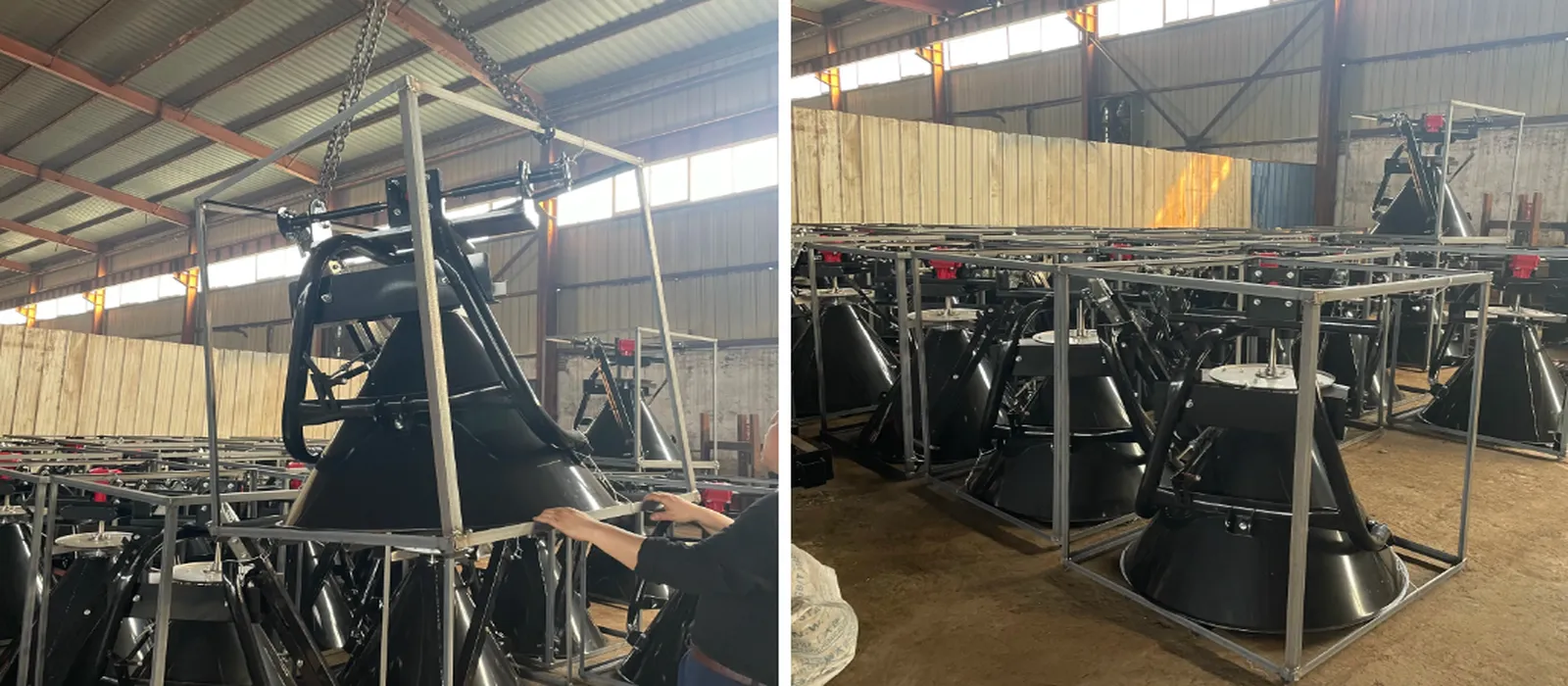
Why Choose EVER-POWER’s Fertilizer Spreader?
EVER-POWER Agricultural Machinery Co., Ltd. has been engaged in the research and development of agricultural machinery for over a decade. Our main products range from PTO shafts, agricultural gearboxes, and a wide array of farming, planting, and harvesting machinery. Our products are complete in specifications, excellent in performance, and reliable in quality. They are sold all over the country and are exported to many countries and regions in Europe, America, Africa, the Middle East, and Southeast Asia all year round.
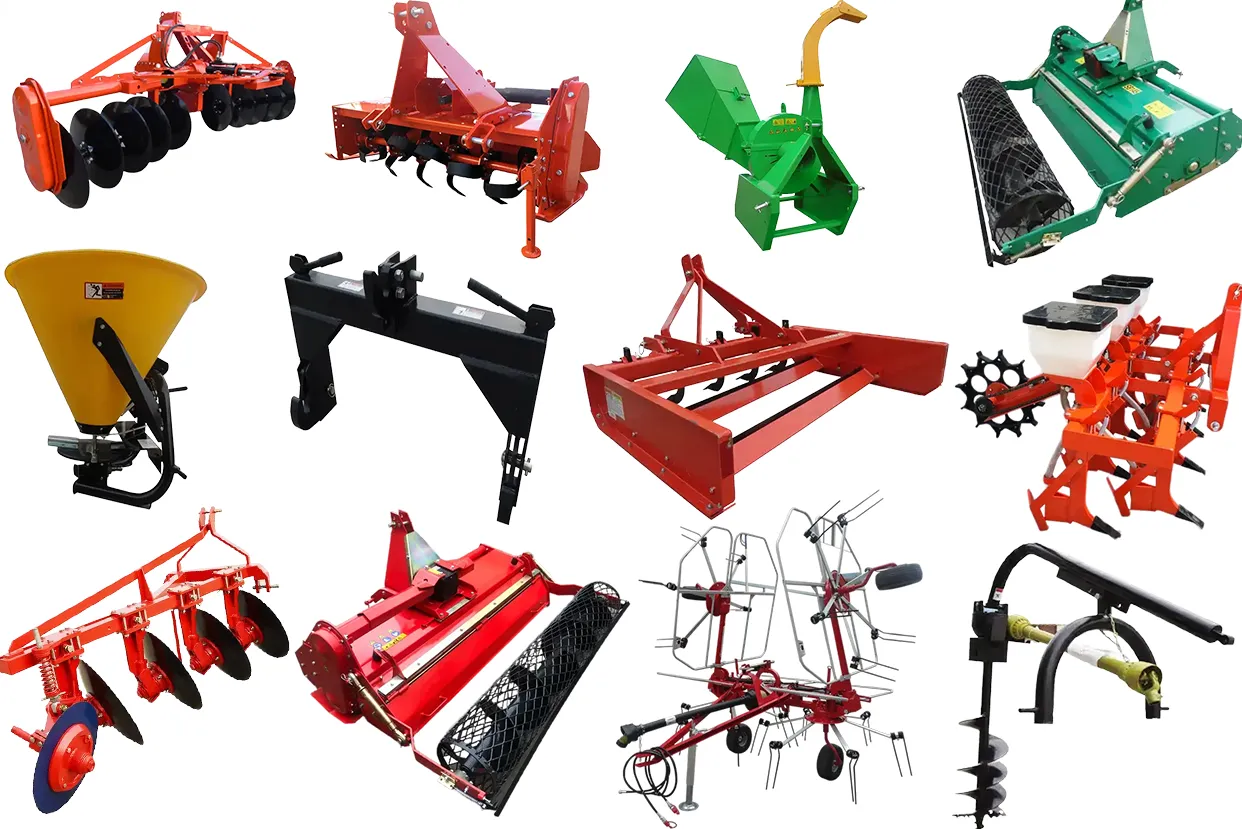
At EVER-POWER, we pride ourselves on our professionalism, with international certifications and a strong commitment to quality. We provide customized services to meet unique needs and have state-of-the-art production facilities. Our after-sales services ensure a smooth experience for our customers. Choose EVER-POWER for all your agricultural machinery needs, and experience the difference of quality and commitment.
Author: Yjx