What is an Agricultural Fertilizer Spreader?
An agricultural fertilizer spreader is an essential piece of farm equipment used to apply fertilizers, herbicides, seeds, and other granular products over a field in a uniform and efficient manner. They are designed to spread fertilizer across a wide area quickly, reducing the time and effort needed for manual spreading. The spreader is usually mounted on a tractor and is powered by the tractor’s engine via a power take-off (PTO) shaft.
Advantages of Agricultural Fertilizer Spreaders
Using an agricultural fertilizer spreader offers numerous advantages:
- Efficiency: Spreaders distribute fertilizer evenly across a wide area in less time.
- Accuracy: They allow for precise control over the application rate and pattern.
- Flexibility: They can be used to spread various types of granular materials.
- Improved Crop Yield: Even and accurate distribution of fertilizer can improve crop yield and quality.
- Cost-Effective: They reduce labor and material costs.
- Customizable: Many models can be adjusted to suit different operational scales.
At EVER-POWER, we manufacture high-quality, reliable, and efficient agricultural fertilizer spreaders that offer these benefits and more.
Applications of the Agricultural Fertilizer Spreader

Fertilizer spreaders can be used in various agricultural activities:
- Spreading granular fertilizers: The primary application, to enrich the soil with nutrients.
- Seeding: Some models can be used to spread seeds over a field.
- Pest Control: They can distribute granular pesticides or herbicides.
- Landscaping: Used to spread grass seed or other materials in landscaping projects.
- Snow Melting: In colder climates, they can spread salt or other de-icing materials on roads or paths.
- Feeding Livestock: Some models can spread feed in livestock yards.
Working Principle of the Tractor Mounted Fertilizer Spreader

- Attachment and Power Source: The spreader is attached to the tractor, usually at the three-point hitch, making it a part of the tractor’s overall machinery.
- Hopper: The primary component of the spreader is the hopper, where the fertilizer is stored before being distributed.
- Conveyor System: A conveyor system at the bottom of the hopper regulates the flow of fertilizer to the spinning disc(s).
- Spinning Disc(s) and Broadcast Mechanism: The heart of the spreader is the spinning disc(s) at the bottom or rear, which throws the fertilizer out in a uniform pattern.
- Adjustment and Control: Operators can adjust the spreading pattern and width by modifying the disc speed, the angle of the vanes on the disc, or the rate of fertilizer feed from the hopper.
- Calibration: Before starting, the operator must calibrate the spreader to ensure the correct amount of fertilizer is applied over a specific area.
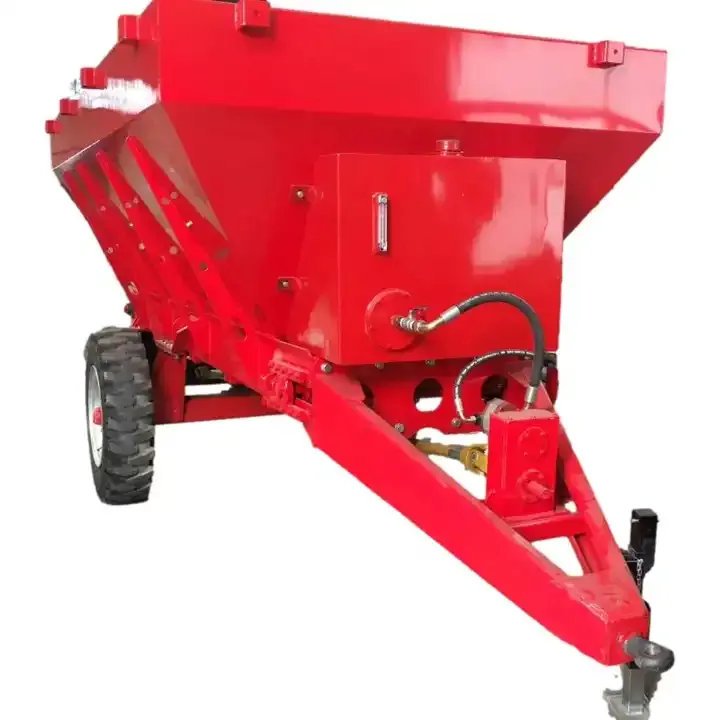
Types of Tractor Mounted Fertilizer Spreaders

- Broadcast Spreaders: They distribute fertilizer in a wide and even pattern, covering a large area.
- Drop Spreaders: Drop spreaders provide more precise application and are often used in situations where accuracy is crucial.
- Pendulum Spreaders: Pendulum spreaders are known for their accuracy and ability to distribute fertilizer evenly.
- Spinner Spreaders: Spinner spreaders are versatile and can handle a wide range of fertilizers.
- Pneumatic Spreaders: Pneumatic spreaders are commonly used for precise seeding and fertilization of crops.
- Manure Spreaders: Specifically designed to distribute manure over agricultural land.
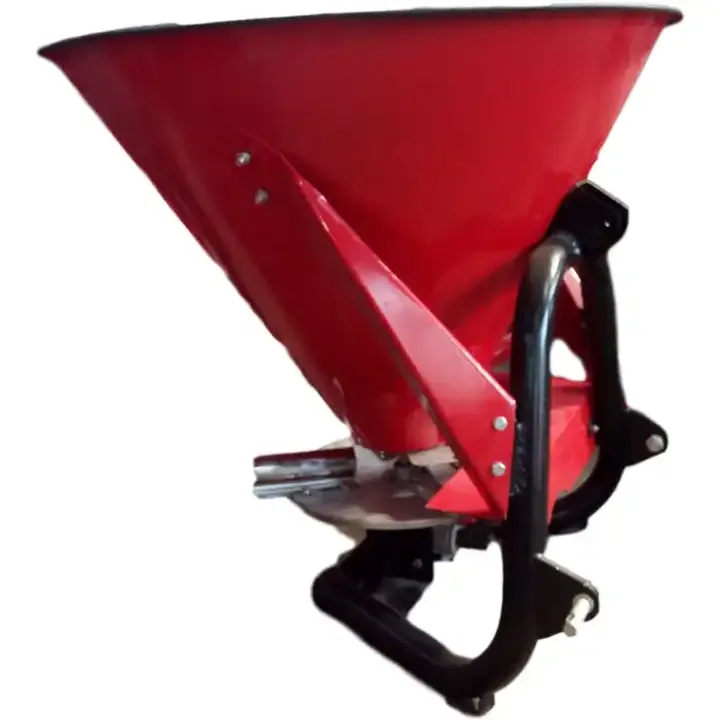
Installation Steps of the Tractor Mounted Fertilizer Spreader
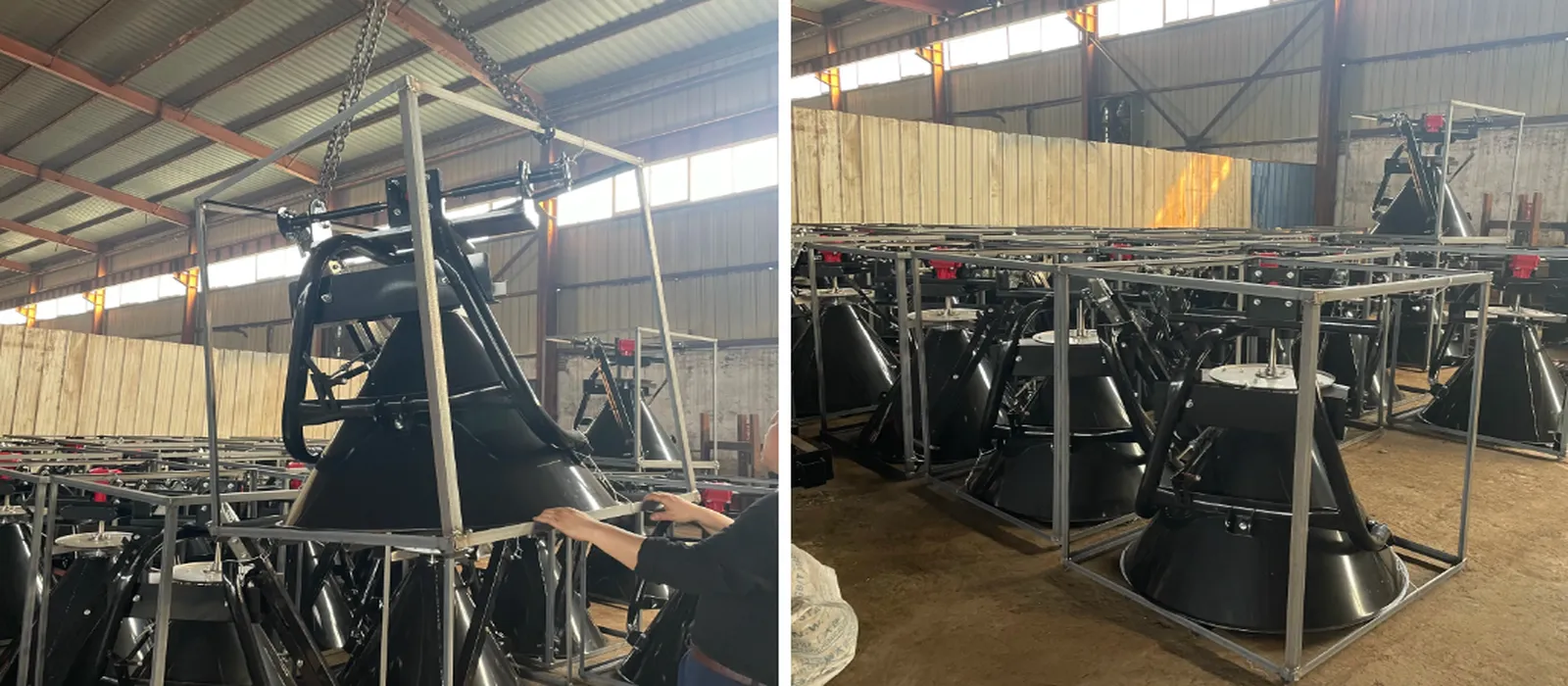
- Prepare the tractor: Ensure that the tractor is in good working condition and compatible with the fertilizer spreader.
- Attach the spreader to the tractor: Lower the tractor’s hitch mechanism and connect it to the spreader’s hitch.
- Connect the power take-off (PTO): Locate the PTO shaft on the tractor and the corresponding input point on the spreader.
- Check hydraulic or electrical connections: If the spreader requires hydraulic or electrical connections to operate, ensure that these connections are properly made.
- Adjust the spreading mechanism: Depending on the type of spreader, there may be adjustments required for the spreading width, pattern, or rate.
- Test the spreader: Before using the spreader in the field, perform a test run to ensure that it is functioning correctly.
Operation Precautions of the 3-point Mounted Fertilizer Spreaders
- Ensure proper tractor compatibility: Verify that your tractor is compatible with the 3-point hitch system required by the fertilizer spreader.
- Check hitch connections: Before attaching the spreader to the tractor’s 3-point hitch, inspect the hitch components for any damage or wear.
- Distribute weight evenly: When attaching the spreader to the 3-point hitch, make sure the weight is evenly distributed.
- Adjust hitch height: Adjust the 3-point hitch height to ensure that the spreader is level when in operation.
- Secure PTO connection: Connect the power take-off (PTO) shaft from the tractor to the spreader’s input shaft.
- Calibrate the spreader: Properly calibrate the spreader to achieve accurate fertilizer application.
- Operate at appropriate speeds: Maintain a consistent and appropriate operating speed while spreading fertilizer.
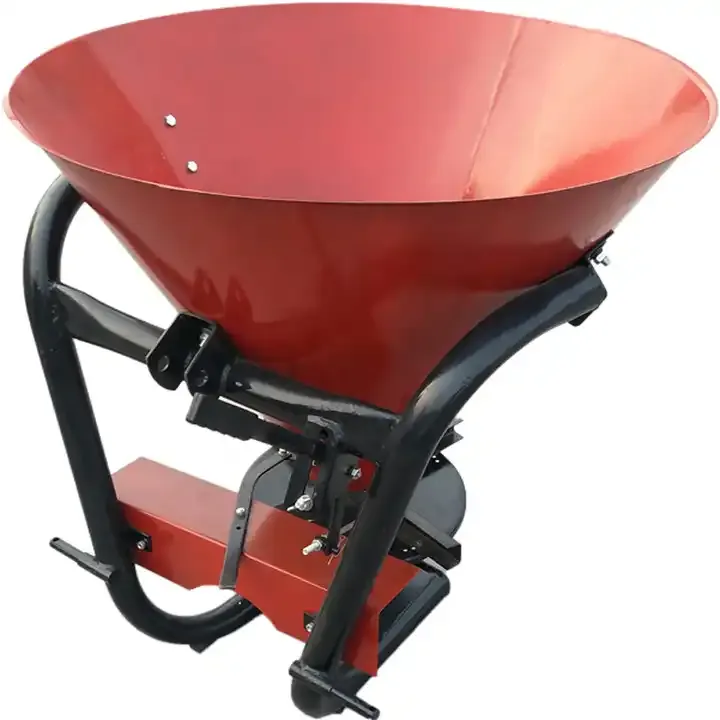
Why Choose EVER-POWER’s Fertilizer Spreader?
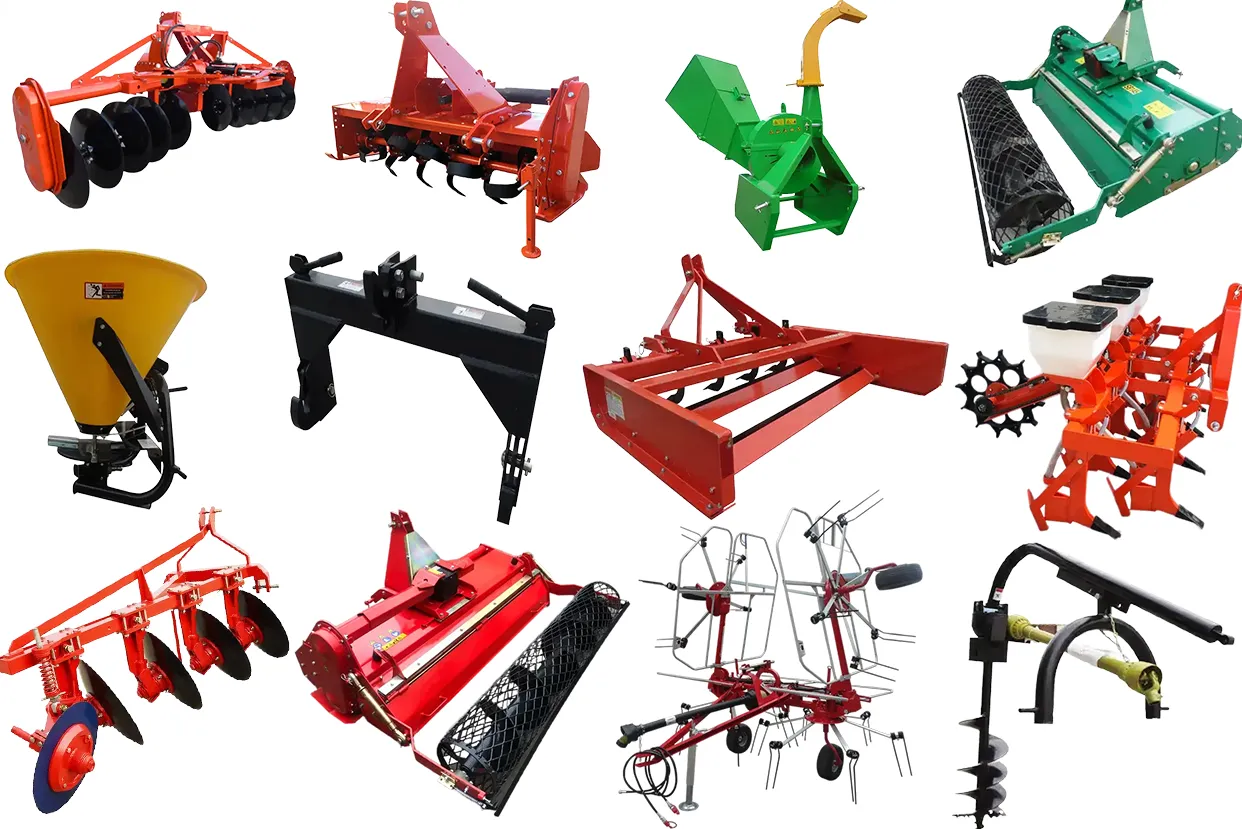
EVER-POWER Agricultural Machinery Co., Ltd. is an industry leader in the production of high-quality agricultural machinery. Our products are renowned for their performance, reliability, and durability. We offer a wide range of farming machinery and accessories, including high-quality tractor-mounted fertilizer spreaders. Our products are certified to international standards and customized to meet individual needs. We have advanced production facilities and provide excellent after-sales service. Choose EVER-POWER for superior quality, professionalism, and customer satisfaction.
Author: Yjx