Are there any specialized spline shaft designs for high-temperature applications?
Introduction
In high-temperature applications, the performance and durability of spline shafts are of utmost importance. As such, it becomes crucial to explore the existence of specialized designs that can withstand the demanding conditions encountered in these environments. This article aims to delve into the topic and provide a comprehensive understanding of whether there are any specialized spline shaft designs tailored specifically for high-temperature applications.
1. Understanding the Challenges
To comprehend the need for specialized spline shaft designs in high-temperature applications, it is essential to first understand the challenges they face. High temperatures can lead to thermal expansion, oxidation, and material degradation, which can significantly impact the performance and reliability of standard spline shafts. Therefore, engineers and designers have been exploring innovative solutions to overcome these challenges.
2. Heat-Resistant Materials
One approach to address the high-temperature requirements is to utilize heat-resistant materials for spline shafts. These materials, such as superalloys and advanced ceramics, exhibit exceptional thermal stability and can withstand extreme temperatures without compromising their mechanical properties. By incorporating these materials into spline shaft designs, engineers can ensure optimal performance in high-temperature environments.
3. Coating Technologies
Another avenue of exploration lies in the realm of coating technologies. Coatings can provide a protective layer on spline shaft surfaces, shielding them from the detrimental effects of high temperatures. Advanced thermal barrier coatings, such as ceramic or metallic coatings, can offer superior heat resistance, reduced friction, and enhanced wear resistance. These coatings can significantly extend the lifespan and reliability of spline shafts in high-temperature applications.
4. Specialized Geometries
In addition to materials and coatings, specialized spline shaft geometries have been developed to tackle the challenges of high-temperature applications. For instance, spline shafts with enhanced heat dissipation features, such as intricate cooling channels or optimized surface roughness, can effectively manage heat buildup. By carefully designing the geometry, engineers can minimize thermal stresses and ensure the longevity of spline shafts under high-temperature operating conditions.
5. Lubrication and Sealing
Proper lubrication and sealing mechanisms play a vital role in the performance of spline shafts in high-temperature applications. Specialized lubricants that can withstand elevated temperatures and maintain their lubricating properties are essential. Additionally, effective sealing systems that prevent the ingress of contaminants and maintain a stable operating environment are crucial for the longevity of spline shafts in these demanding conditions.
6. Testing and Validation
To ascertain the reliability and feasibility of specialized spline shaft designs for high-temperature applications, rigorous testing and validation procedures are necessary. Testing methods such as thermal cycling, high-temperature torsion, and accelerated aging can simulate the harsh conditions that spline shafts may encounter in real-world scenarios. Through comprehensive testing, engineers can evaluate the performance and identify any areas that require further refinement.
Conclusion
In conclusion, the quest for specialized spline shaft designs for high-temperature applications has led to significant advancements in materials, coatings, geometries, lubrication, and sealing. By combining these innovative approaches, engineers can develop spline shafts capable of withstanding the challenges posed by elevated temperatures. As industries continue to push the boundaries of thermal environments, the development of specialized spline shaft designs remains crucial for ensuring optimal performance, reliability, and longevity.
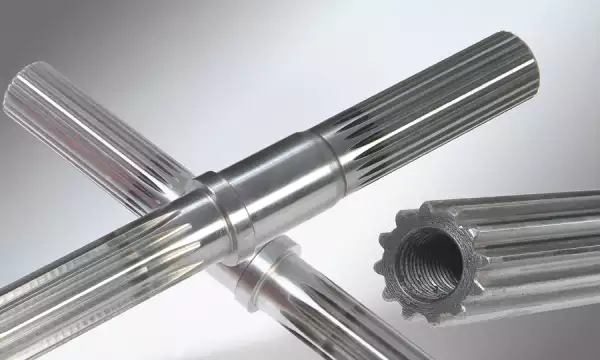
Our company specializes in the production and sale of various types of gear and spline shafts. With our expertise in the field, we offer several advantages that set us apart from the competition:
- Advanced Technology: We leverage state-of-the-art manufacturing techniques to ensure the highest quality spline shafts.
- Customization Options: Our team can tailor spline shaft designs to suit high-temperature applications, providing specialized solutions for your specific needs.
- Durability: Our spline shafts are built to withstand extreme temperatures and offer exceptional performance even in demanding conditions.
- Reliability: We prioritize reliability in our products, ensuring that our spline shafts deliver consistent and dependable performance.
- Industry Expertise: With years of experience in the field, our team of experts has a deep understanding of spline shafts and can provide valuable guidance and support.

Spline Shaft Working Principle and Functionality
Spline shafts are a crucial component in various mechanical systems. They transmit torque and motion between two or more shafts, ensuring smooth and efficient power transfer. The splines, or ridges, on the shaft’s surface engage with corresponding grooves in other components, creating a strong connection while allowing for rotational movement.
Spline Shaft Design and Selection Guide
When it comes to designing and selecting spline shafts for high-temperature applications, several factors need to be considered. These include the material, heat treatment, lubrication, and tolerances. Our experts can assist you in making informed decisions to optimize the design and ensure optimal performance under challenging conditions.
Spline Shaft Manufacturing and Processing Techniques
The manufacturing and processing of spline shafts require precision and expertise. Our skilled technicians utilize cutting-edge machinery and techniques to produce spline shafts with impeccable accuracy and quality. From material selection to heat treatment and surface finishing, we follow rigorous processes to meet the highest industry standards.
Spline Shaft Application Examples and Industry Practices
Spline shafts find applications in various industries, including automotive, aerospace, and machinery. They are commonly used in power transmission systems, gearboxes, and other mechanisms that require efficient torque transfer. Our extensive experience allows us to provide real-world examples and industry best practices, helping you make informed decisions for your specific applications.
If you are looking for reliable and high-performance spline shafts for your high-temperature applications, look no further. Contact us today to discuss your requirements and explore how we can collaborate to meet your needs.
Author: Miya